Tragedy of HMS Implacable: Why Britain Destroyed a Legend of Trafalgar
In 1949, Britain deliberately blew up the final remaining French-built warship from the Battle of Trafalgar.
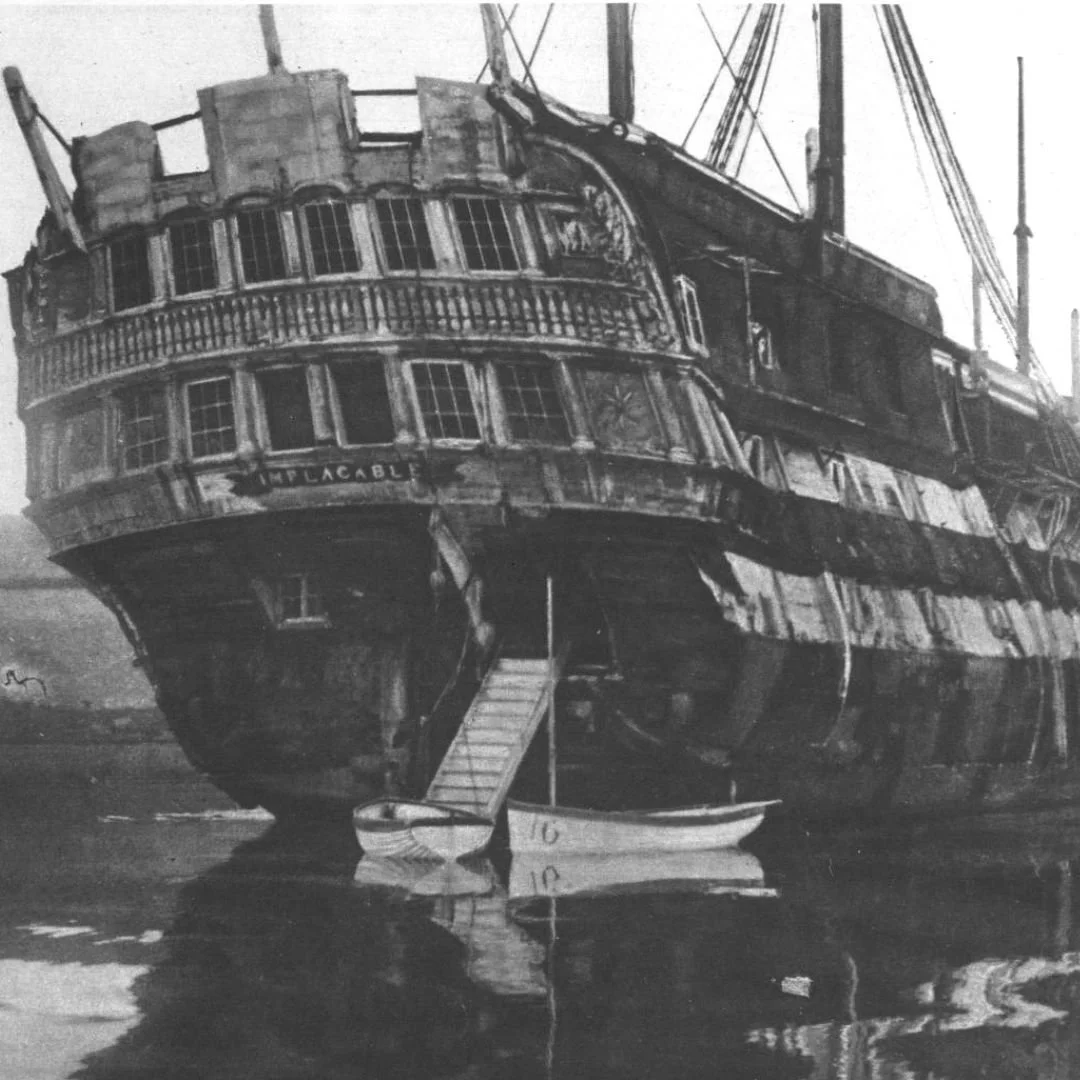
Though this remarkable vessel managed to survive that historic clash in 1805, she was subsequently captured by the Royal Navy and recommissioned as HMS Implacable.
For nearly a century and a half, she faithfully served her former enemies.
Despite her extraordinary historical significance, the aging ship was ultimately scuttled in 1949, though her original, ornate stern was fortunately salvaged for posterity.
The sinking of HMS Implacable is widely regarded today as one of the greatest acts of peacetime cultural vandalism in British history.
Had she survived just a few more decades into the era of modern tourism and heritage funding, she would undoubtedly be celebrated as a global treasure, standing proudly alongside HMS Victory as a living monument to the Age of Sail.
Instead, she rests in pieces at the bottom of the English Channel.
This is her incredible true story.
In December 1949, a somber crowd gathered on the choppy waters of the English Channel.
Royal Navy officers stood at attention, French officials watched with heavy hearts, and onlookers on nearby boats wept openly as a series of explosive charges detonated.
With a slow, agonizing groan, the oldest surviving French built ship of the line slipped beneath the waves.
This was the end of HMS Implacable, originally the French warship Duguay-Trouin.
She had survived the devastating fires of the Battle of Trafalgar, outlived the age of sail, and served the British maritime empire for nearly a century and a half.
Yet, in an act that modern historians view as a tragedy of monumental proportions, she was intentionally scuttled by the very nation that had captured her.
Long before she bore a British name, the ship began her life in Rochefort, France.
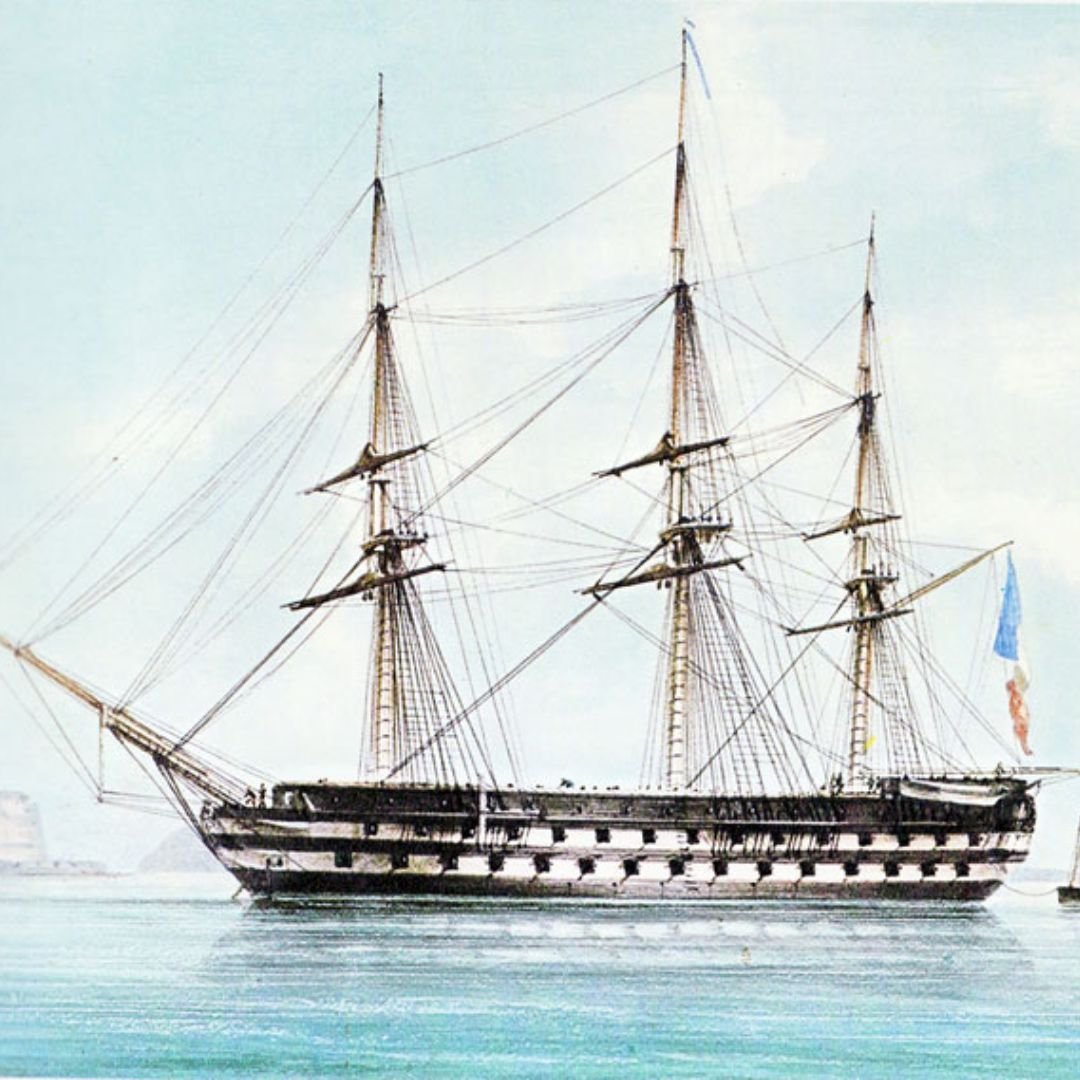
Launched in 1800 as the Duguay-Trouin, she was a magnificent 74-gun Téméraire-class ship of the line, representing the backbone of Napoleon Bonaparte’s naval ambitions.
On October 21, 1805 the vessel found herself in the thick of the most famous naval clash in history: The Battle of Trafalgar.
Under the command of Captain Claude Touffet, the ship fought valiantly against Admiral Horatio Nelson’s fleet.
While the battle resulted in a catastrophic defeat for the Franco-Spanish armada, the Duguay-Trouin was one of the few French ships to escape the immediate slaughter, slipping away alongside three other vessels under Rear-Admiral Dumanoir le Pelley.
Her luck, however, was short-lived.
Just two weeks later, on November 4, 1805 a British squadron intercepted the fleeing ships at the Battle of Cape Ortegal.
After a brutal, bloody engagement in which Captain Touffet was killed, the battered Duguay-Trouin was finally captured by the Royal Navy.
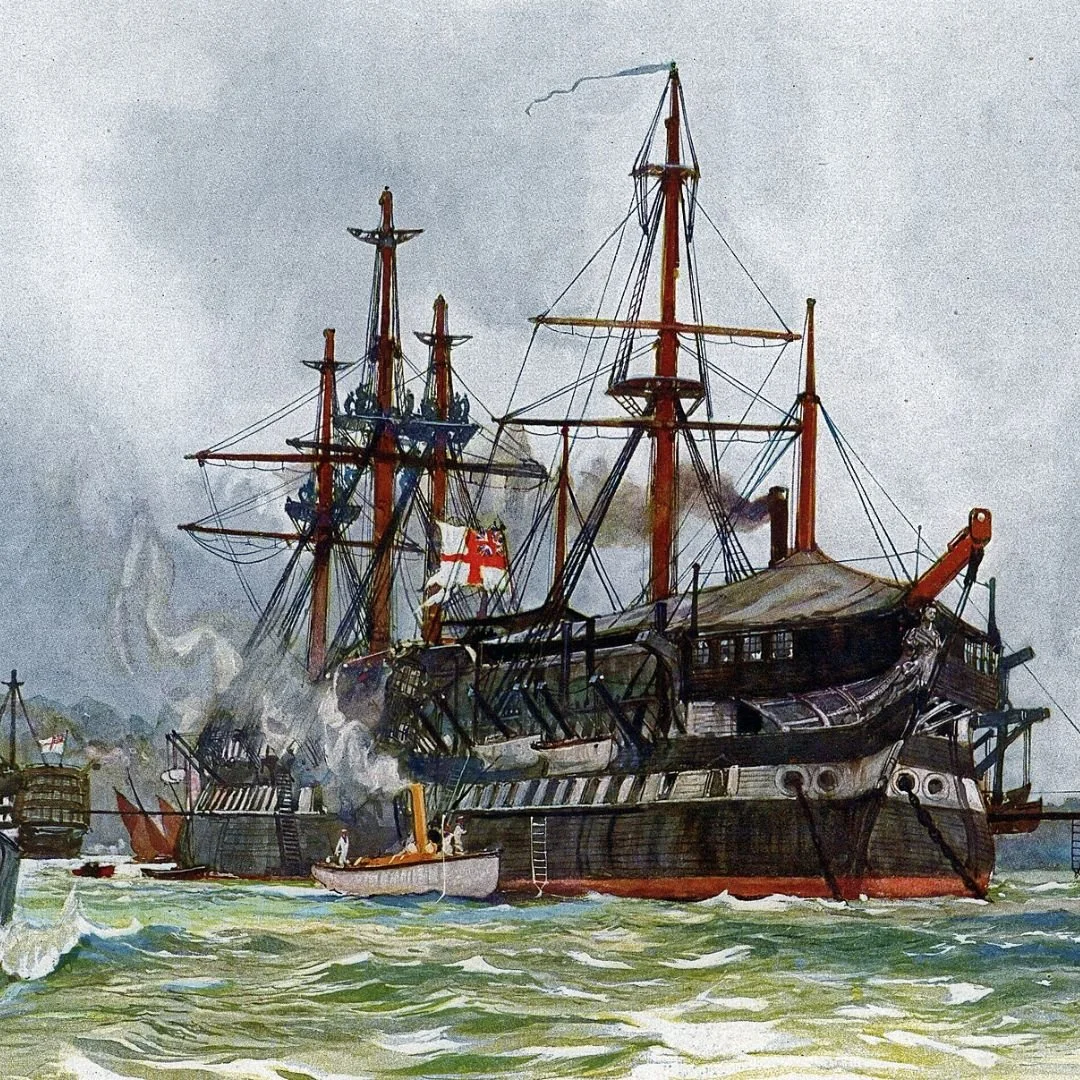
The British knew a finely crafted ship when they saw one, and instead of breaking her up for scrap, the Royal Navy repaired the prize, fitted her with British guns, and commissioned her into service under the defiant new name of HMS Implacable.
For the next several decades, the vessel proved her worth across the globe.
During the Baltic Campaign of 1808, she engaged the Russian fleet and famously captured the Russian ship Vsevolod.
Decades later, she participated in the blockade of Alexandria during the Syrian War of 1840.
As the era of steam ironclads took over the world's oceans, Implacable was converted into a training ship, serving alongside HMS Victory in Portsmouth harbour to teach generations of young British sailors the ropes.
By the dawn of the 20th century, Implacable and Victory stood alone as the only two surviving ships of the line from the Battle of Trafalgar.
By the 1940s, time, dry rot, and neglect had taken a heavy toll on the old wooden warship.
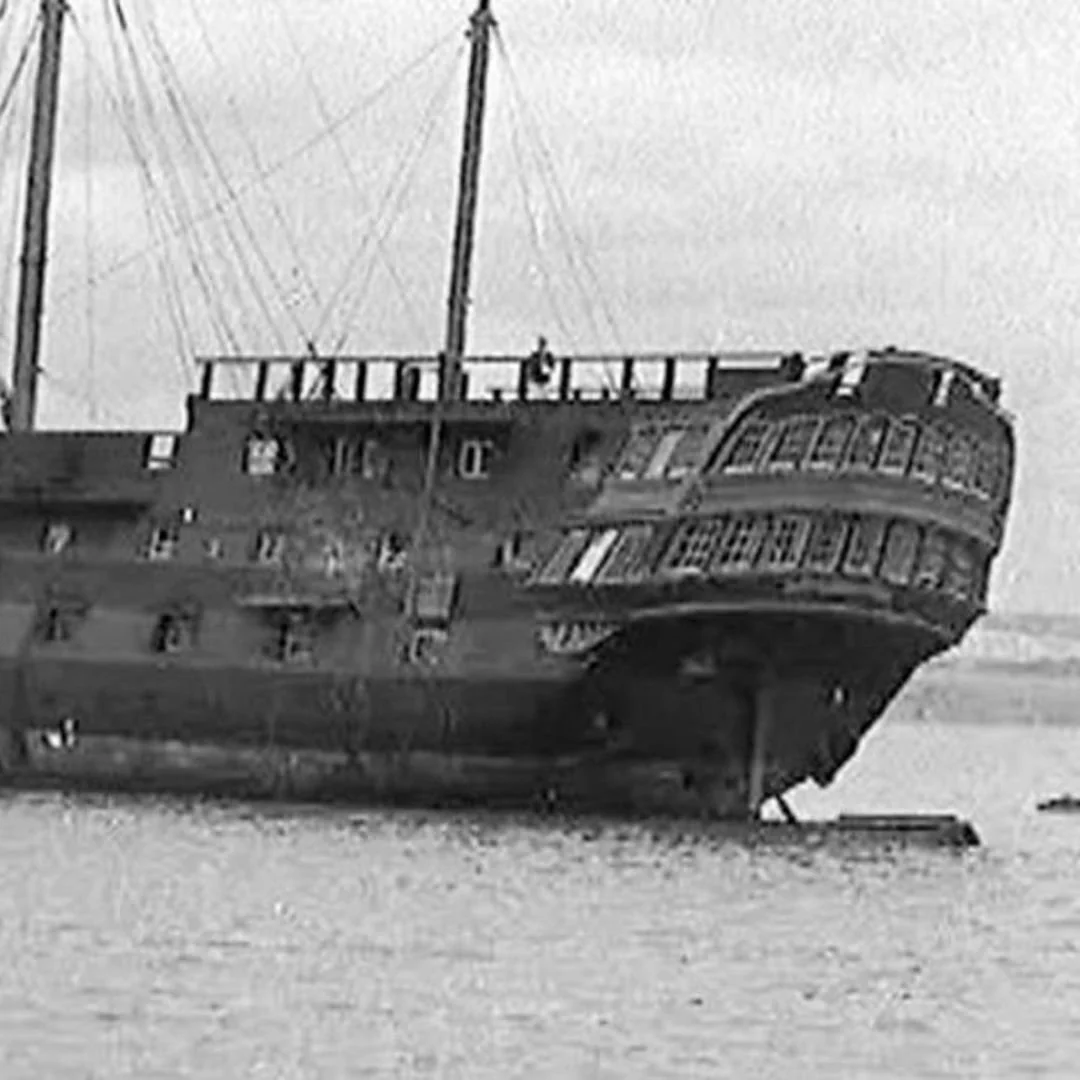
Following the devastating financial drain of World War 2, Britain was virtually bankrupt, and the Royal Navy simply could not justify spending its depleted funds to maintain a rotting wooden relic.
When the Admiralty announced in 1947 that Implacable would have to be broken up or sunk, the news sparked a wave of public outrage.
Historians, naval enthusiasts, and the Society for Nautical Research begged the government to save her, even launching a public appeal to raise the £150,000 required for her restoration.
In a desperate final attempt to save history, the British government offered to give the ship back to France, hoping they would preserve her as a national monument.
Sadly, France was also reeling from the destruction of the war and could not justify the astronomical cost, sealing the fate of the historic vessel.
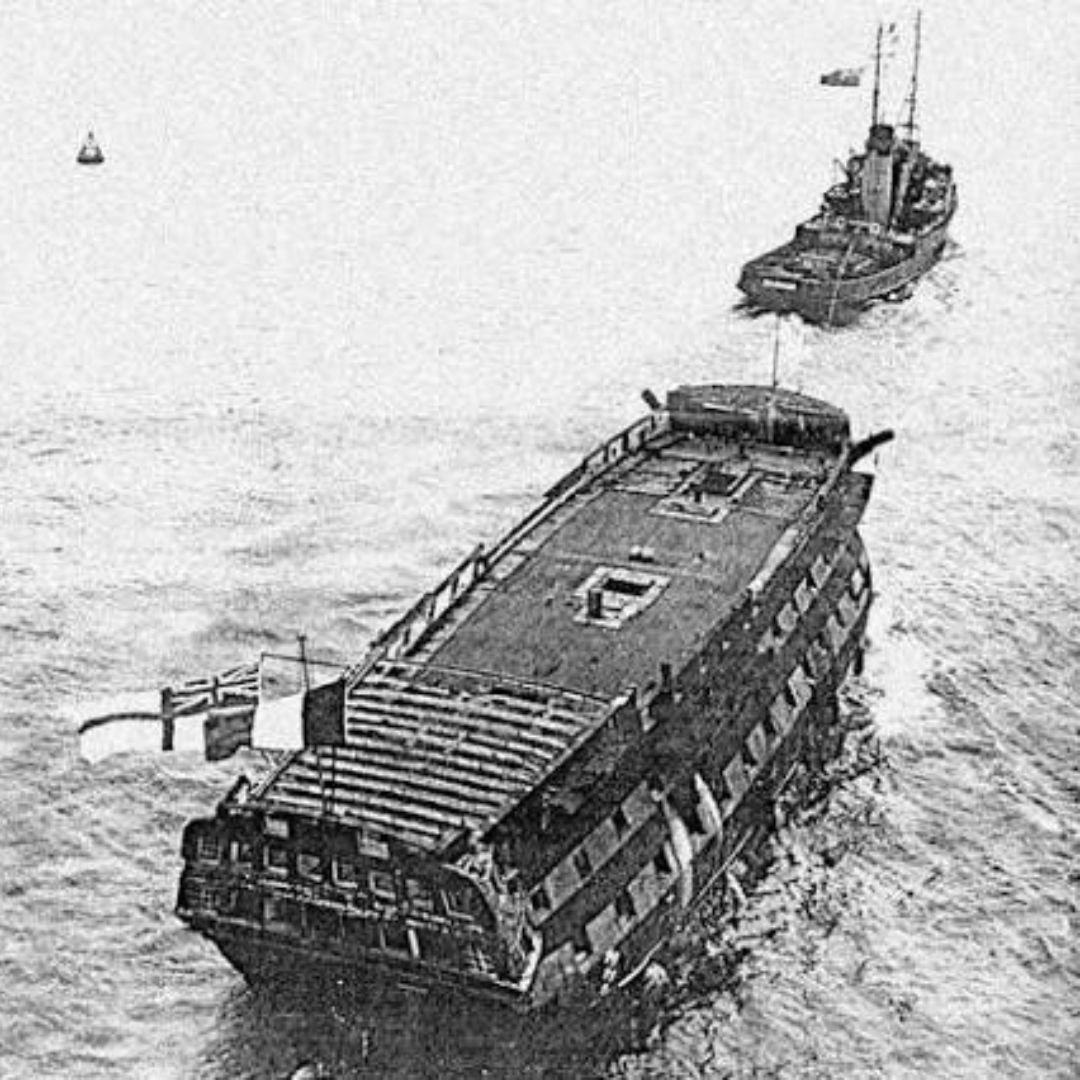
On December 2, 1949 the final, heartbreaking act was carried out as HMS Implacable was towed out to the deep water dumping ground off the coast of Portsmouth.
In a unique display of shared history and mutual respect, both the British White Ensign and the French Tricour were raised side by side on her mast, while a French naval attaché stood alongside British admirals to render honours.
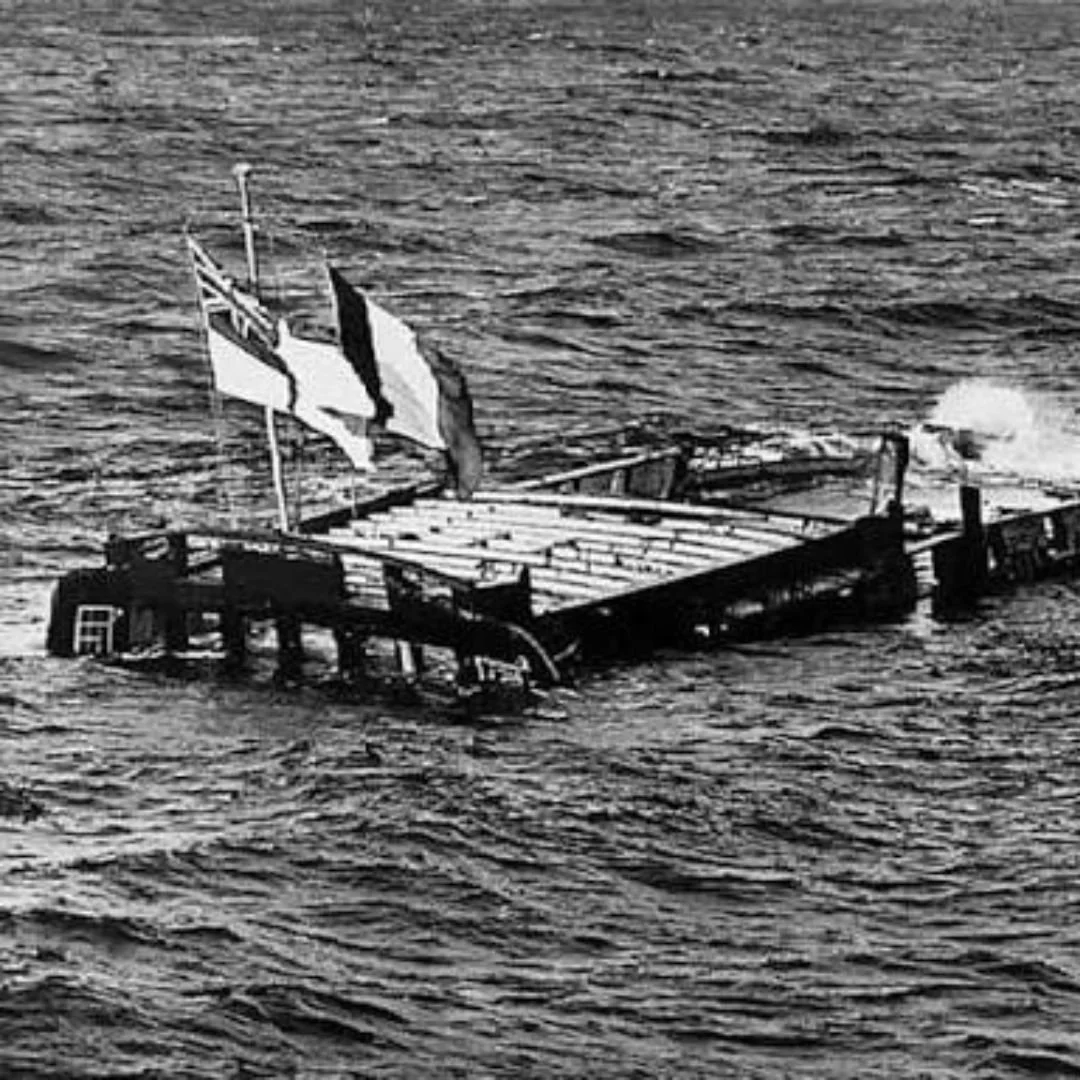
When the explosive charges were detonated, the stout French oak hull resisted the blast, and it took nearly three hours for the sea to finally claim her.
Fortunately, conservationists managed to save a crucial piece of her before she sank, painstakingly dismantling her original, ornately carved French stern galleries and figurehead.
When it became absolutely certain that the ship would be scuttled, a wealthy philanthropist and naval historian named Sir James Caird stepped forward.
He paid £300 (roughly equivalent to £10,000 today) specifically to fund the emergency removal and transport of the ship's massive wooden figurehead and her intricate stern carvings before the hulk was towed out to sea.
The pieces were shipped to the National Maritime Museum in Greenwich, but displaying them presented a monumental challenge.
The stern assembly was not just a flat piece of wood; it consisted of 56 separate, heavily carved component parts, including window frames, profiled balustrades, and structural support timbers.
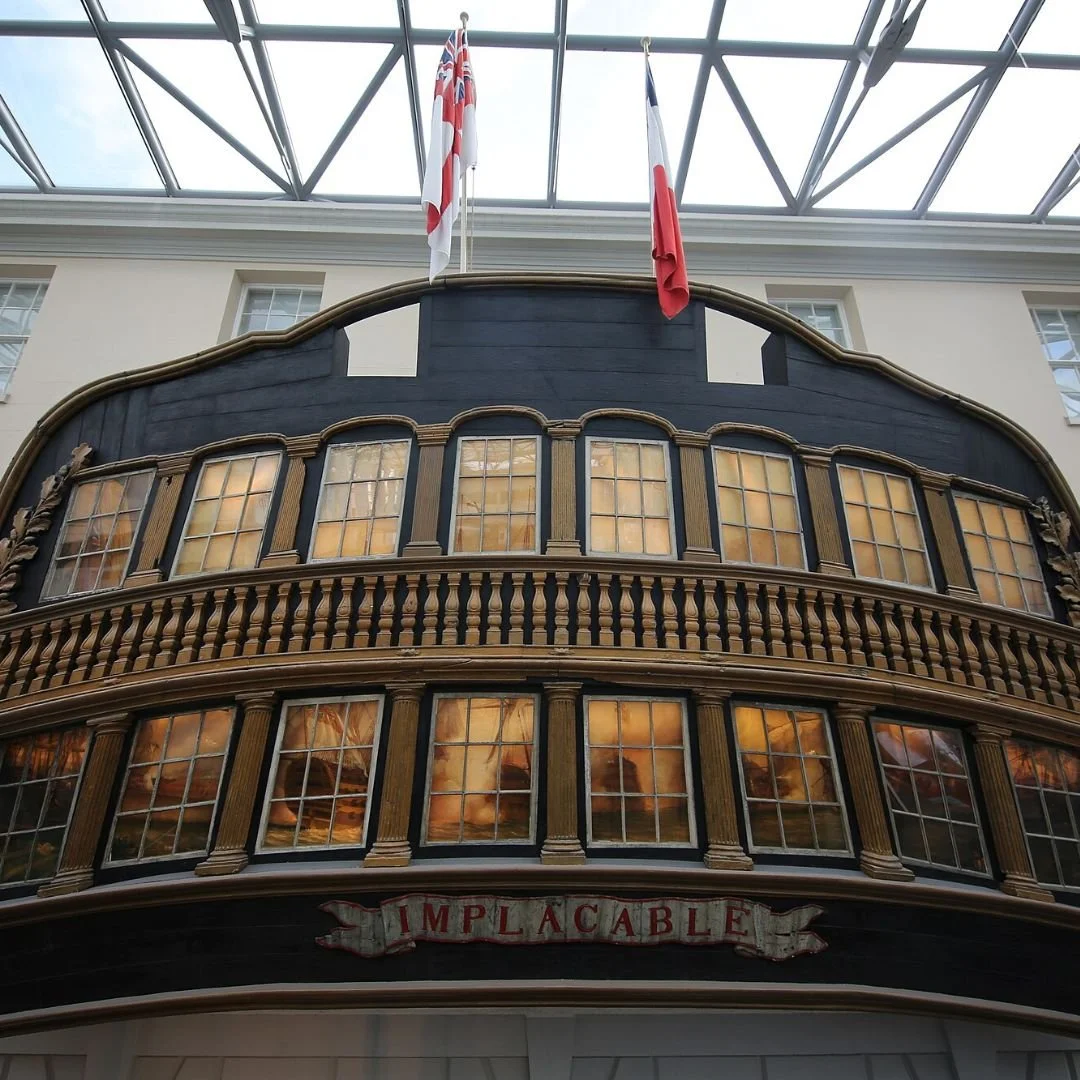
Because of its sheer size and the fact that the museum lacked a space large enough to accommodate a full-scale reconstruction, the 56 pieces spent nearly half a century packed away in storage crates.
The breakthrough came during a massive museum redevelopment project between 1996 and 1999.
Designers realised that the glass-roofed Neptune Court (now known as Ocean Court) provided the perfect vertical space.
Museum conservators finally unpacked the crates, meticulously restored the 200 year-old French oak, and reassembled the 56 parts onto a specially constructed, full-scale replica transom (the flat back section of a ship's hull).
Today, the display stands as a breathtaking, multi-story focal point in Ocean Court.
Visitors can stand directly beneath it to marvel at the massive, classical architecture of a Napoleonic-era French warship, seeing exactly where the officers would have stood to look out across the waves at Trafalgar.
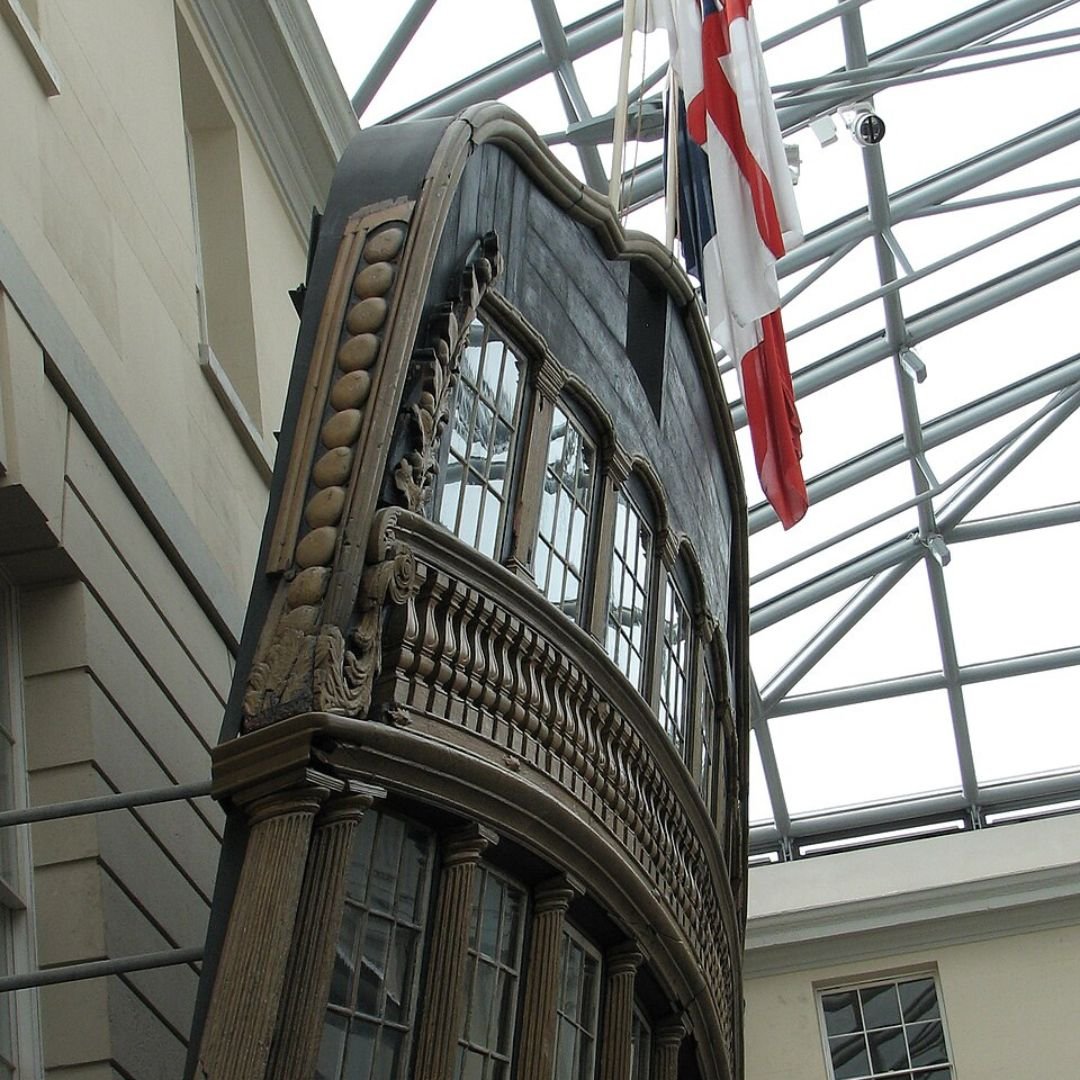
Adjacent to it, the ship’s scowling wooden figurehead is also on display, completing the physical legacy of a legend that refused to be entirely forgotten.
If you enjoyed this blog post, please follow Exploring GB on Facebook for more!
Thank you for visiting Exploring GB.