Masterpiece of Prehistoric Engineering: The Dover Bronze Age Boat
For generations, standard history lessons often painted a bleak picture of prehistoric Britain as a primitive, isolated island cut off from the rest of the world.
The conventional narrative suggested that civilization, advanced technology, and meaningful contact with the continent only truly arrived when the Roman legions crossed the English Channel.
Britain was viewed as an island on the absolute edge of the known universe, populated by tribal communities lacking the means or the ambition to venture beyond their own shores.
The discovery of the Dover Bronze Age Boat completely shattered this isolationist myth.
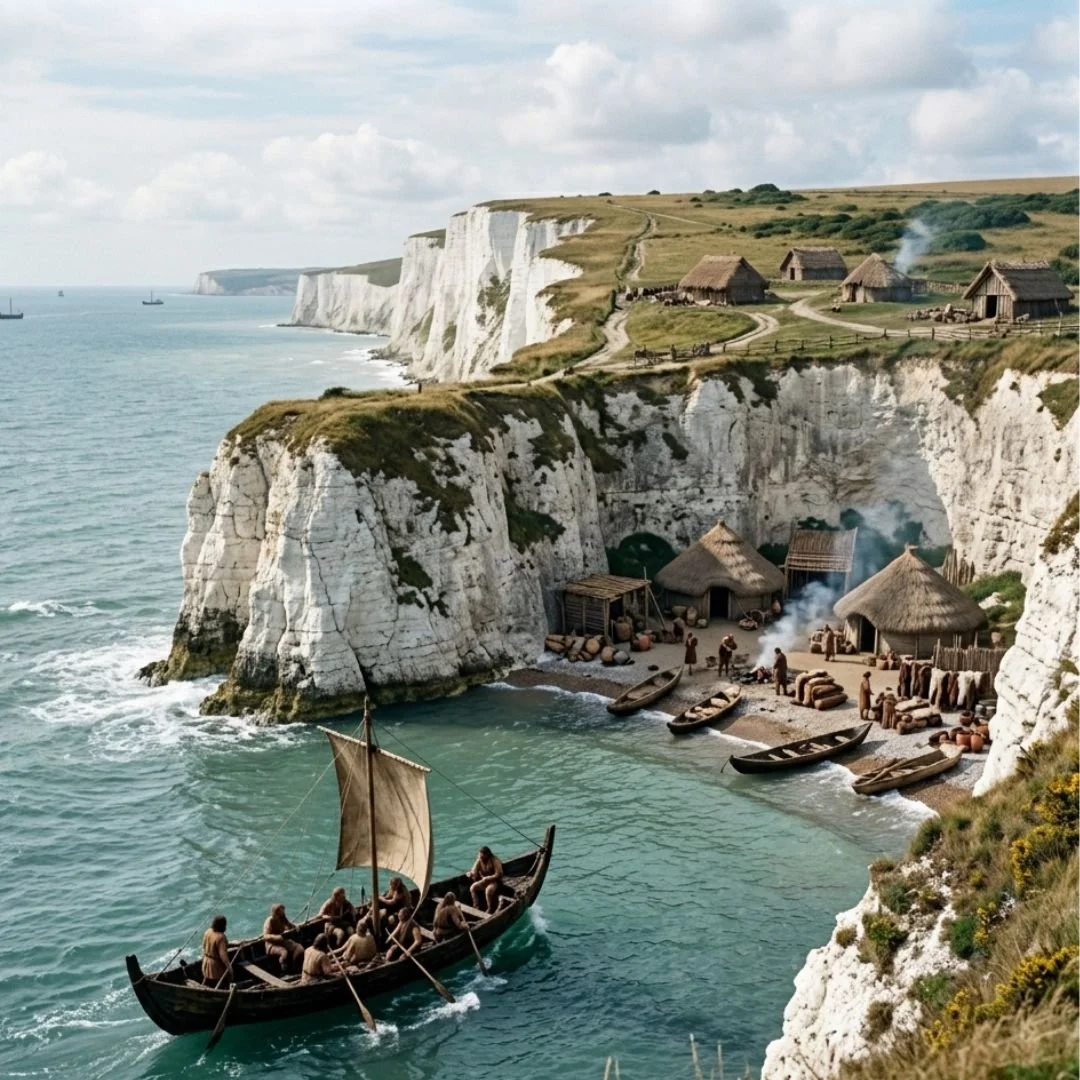
Long before Rome was even a cluster of mud huts on the banks of the Tiber, prehistoric Britons were building sophisticated, deep-sea vessels capable of braving the treacherous currents of the English Channel.
This was not a culture waiting to be discovered or civilised; it was an active participant in a vast, prosperous international trade network that spanned across Western Europe.
By proving that ancient people possessed the engineering brilliance to navigate open seas, this single archaeological find rewrote the timeline of European maritime history.
It transformed our understanding of the Channel from a terrifying barrier into a prehistoric highway, proving that Britain had been deeply connected to the wider world for millennia.
In September 1992, construction workers making way for the new A20 road link between Folkestone and Dover discovered a dark, waterlogged mass of timber deep beneath the streets of Kent.
Embedded six metres below the surface within the ancient gravels of the River Dour, the structure was quickly identified by archaeologists from the Canterbury Archaeological Trust as a prehistoric shipwreck.
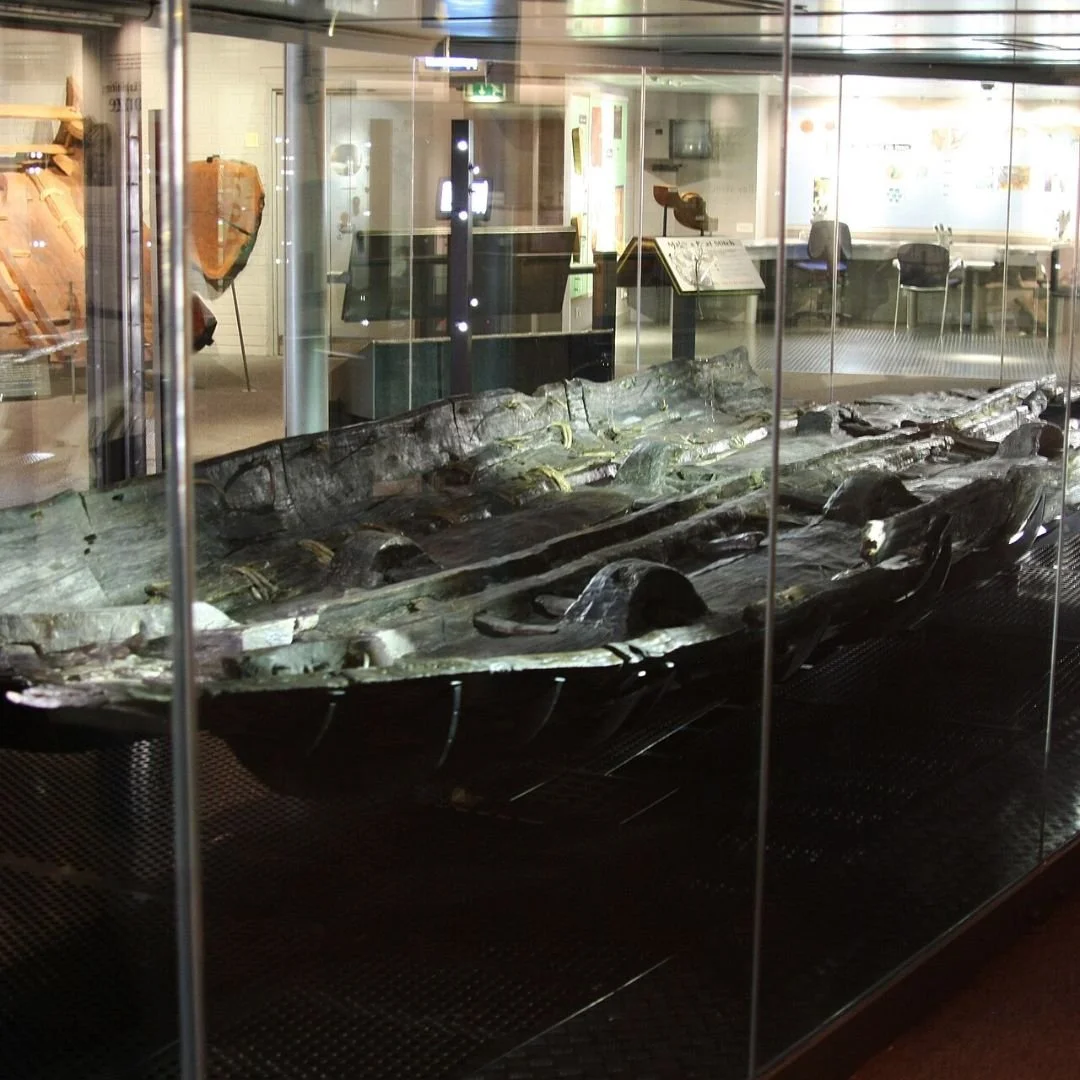
Radiocarbon analysis confirmed a staggering origin date of roughly 1550 BC, making the vessel over 3,500 years old.
It remains one of the oldest known intact seagoing craft in the entire world, offering an unprecedented window into the sophisticated maritime capabilities of Europe's Bronze Age societies.
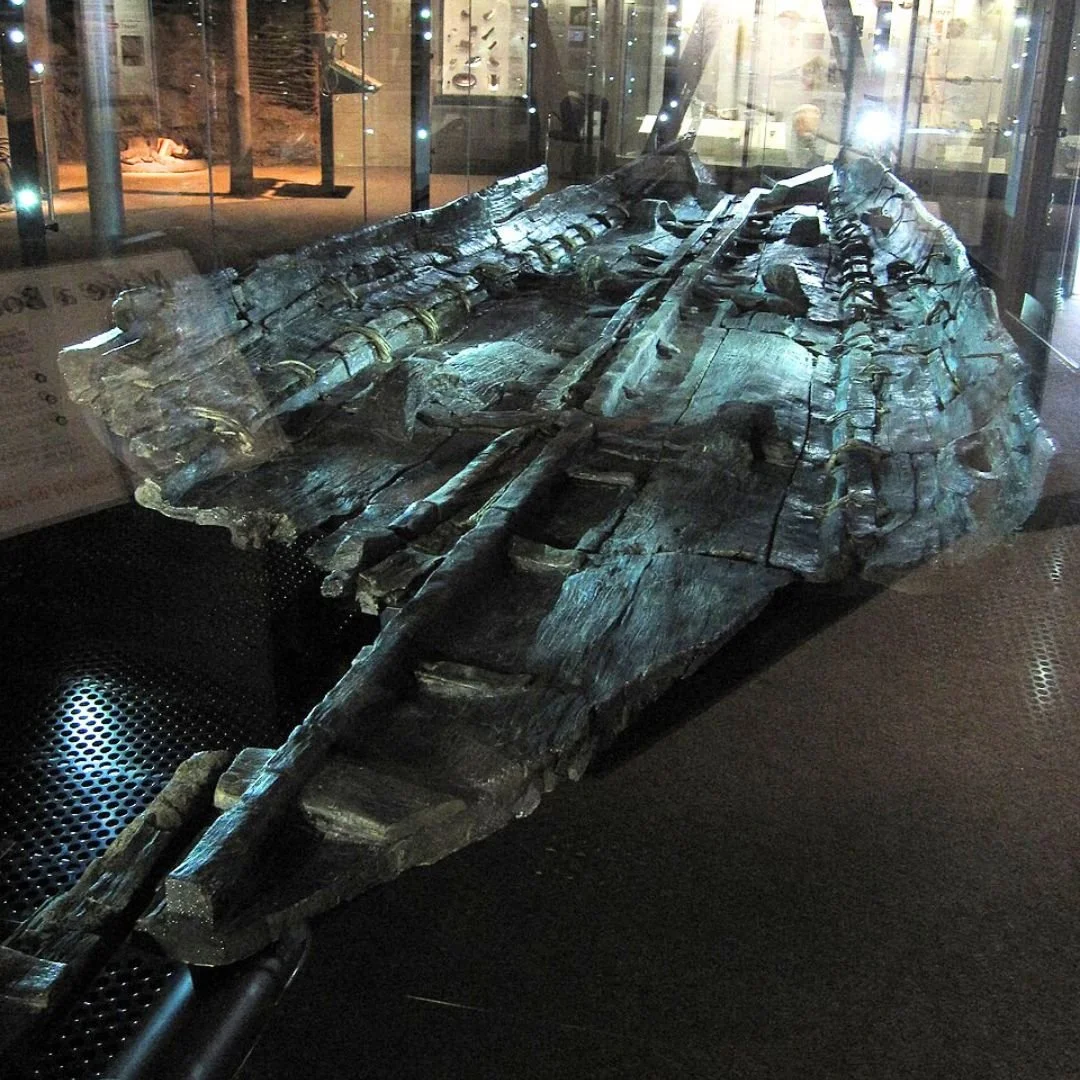
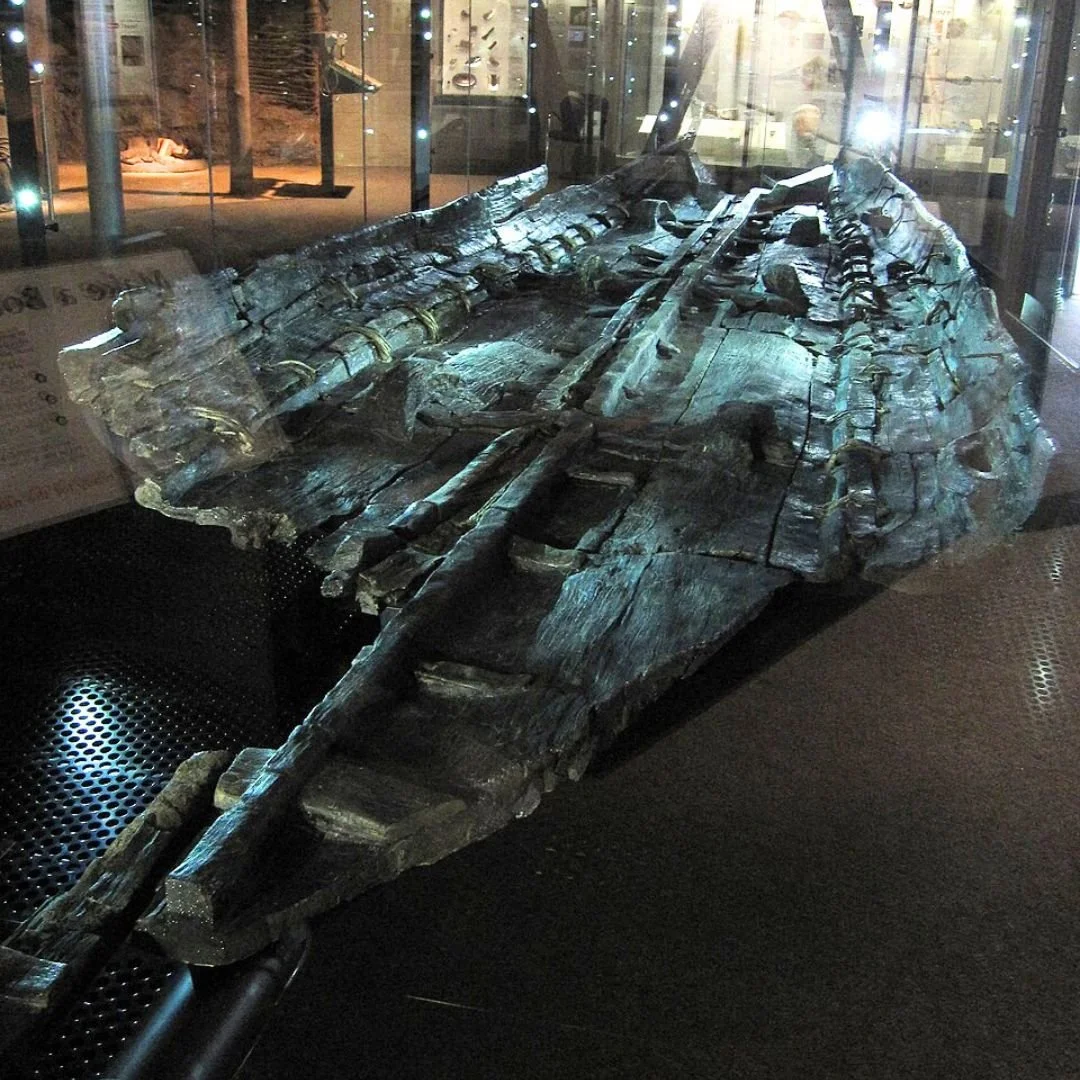
Far from a primitive dugout canoe, the Dover boat represents a highly advanced form of seafaring engineering known as a sewn-plank vessel.
Prehistoric shipwrights meticulously fashioned the craft out of massive, straight-grained oak trees.
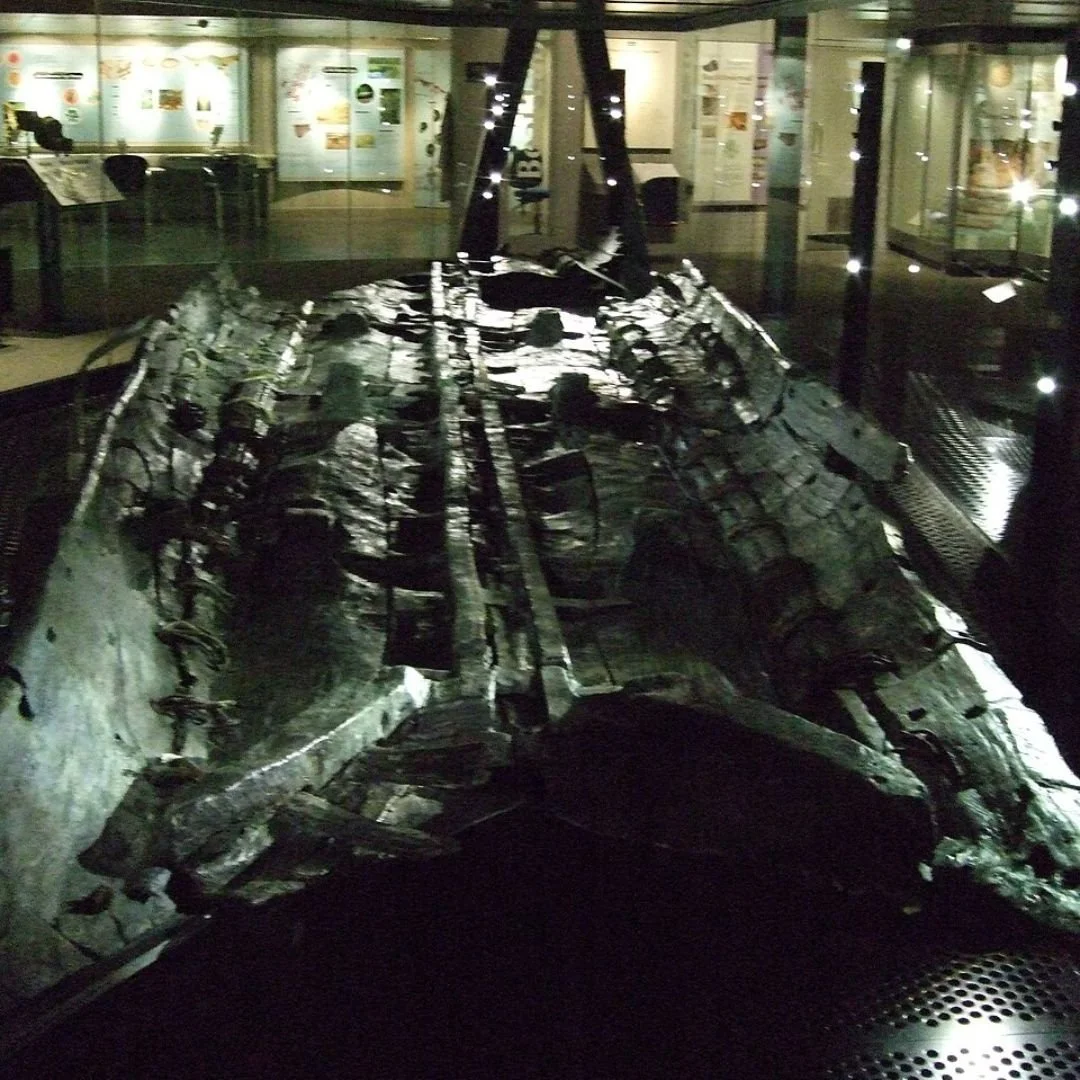
The surviving segment, which measures nearly 9,.5 metres in length, consists of four heavy oak planks: two wide, flat timbers forming the bottom hull and two curved side planks that created the sloping hull walls.
Rather than utilising metal nails or wooden pegs to secure the main structural timbers, the builders relied entirely on organic materials and complex joinery.
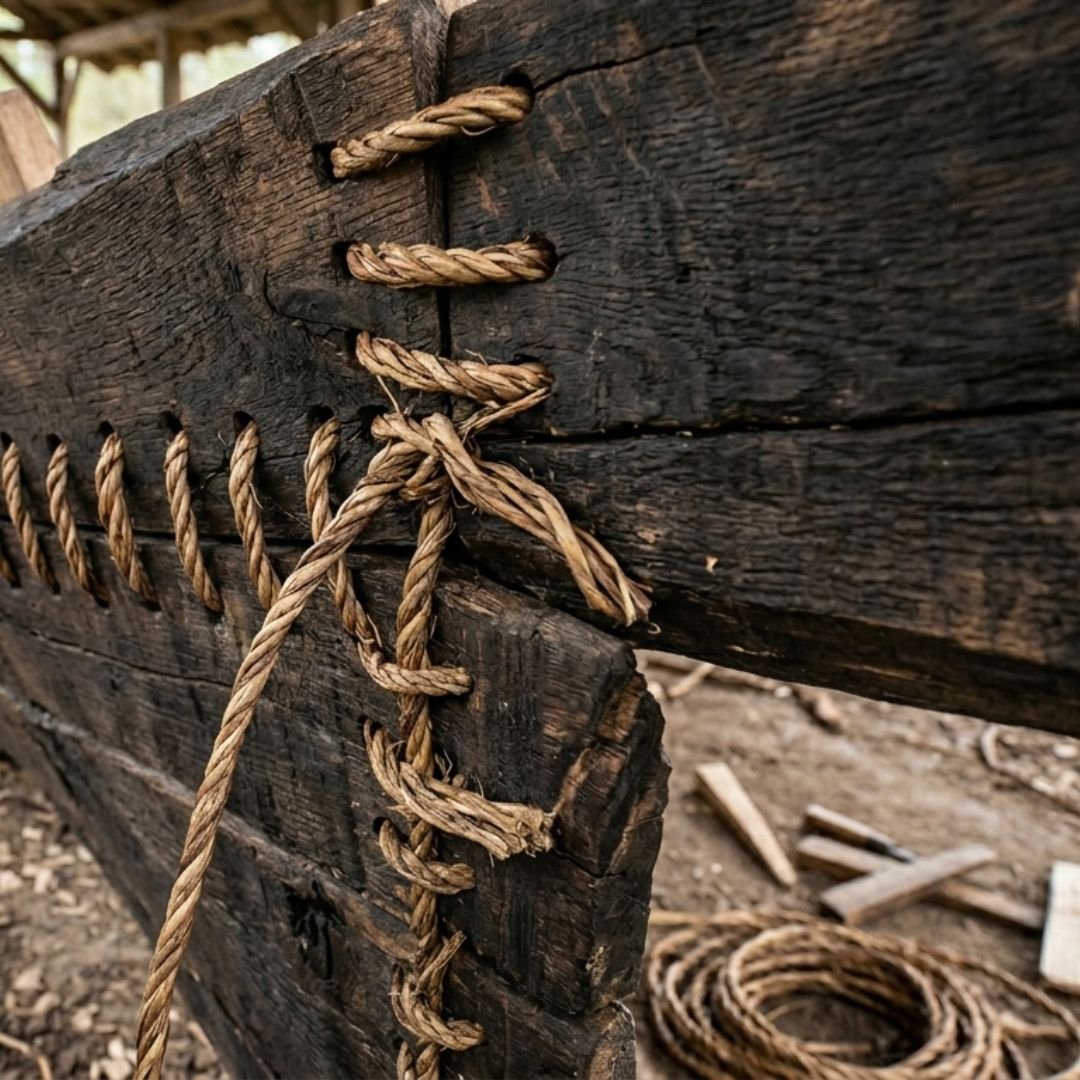
They stitched the massive oak planks together using flexible, twisted cords made from split yew branches, technically referred to as "withies."
To make the hull completely watertight, the seams were packed with a waterproofing mixture of moss and beeswax, which was then held securely in place by long wooden laths running along the joints.
The structural integrity of the craft relied heavily on a series of integral wooden blocks, called cleats, which were carved directly out of the solid oak planks rather than being attached separately.
Thick wooden wedges and transverse timbers were driven through these cleats to lock the bottom and side planks into a rigid, unified shape capable of resisting the immense hydrostatic pressures of open water.
The sheer scale and robustness of the Dover boat indicate that it was built for more than just navigating quiet inland rivers or coastal marshes.
Experts estimate that the complete vessel was originally between 15 and 18 metres long, featuring a beam of more than two metres, and could safely carry a substantial payload alongside a crew of up to 16 paddlers.
During the Middle Bronze Age, the English Channel was not a barrier but a busy, prehistoric highway.
The Dover boat was designed to conquer these rough open waters, used as a heavy duty cargo transport connecting the communities of southern Britain with continental Europe.
This seafaring trade network was driven primarily by the high demand for raw materials; copper from Wales and Ireland was regularly exchanged across the sea for continental tin and luxury goods, facilitating the very metallurgy that defined the era.
The discovery of the boat triggered a high-stakes, fast paced archaeological rescue operation.
Because the timbers were buried directly in the path of an active road construction project, a complete in-situ excavation was impossible.
Compounding the challenge, the waterlogged oak was incredibly fragile; exposure to air threatened to dry out the wood, causing it to shrink, warp, and disintegrate within hours.
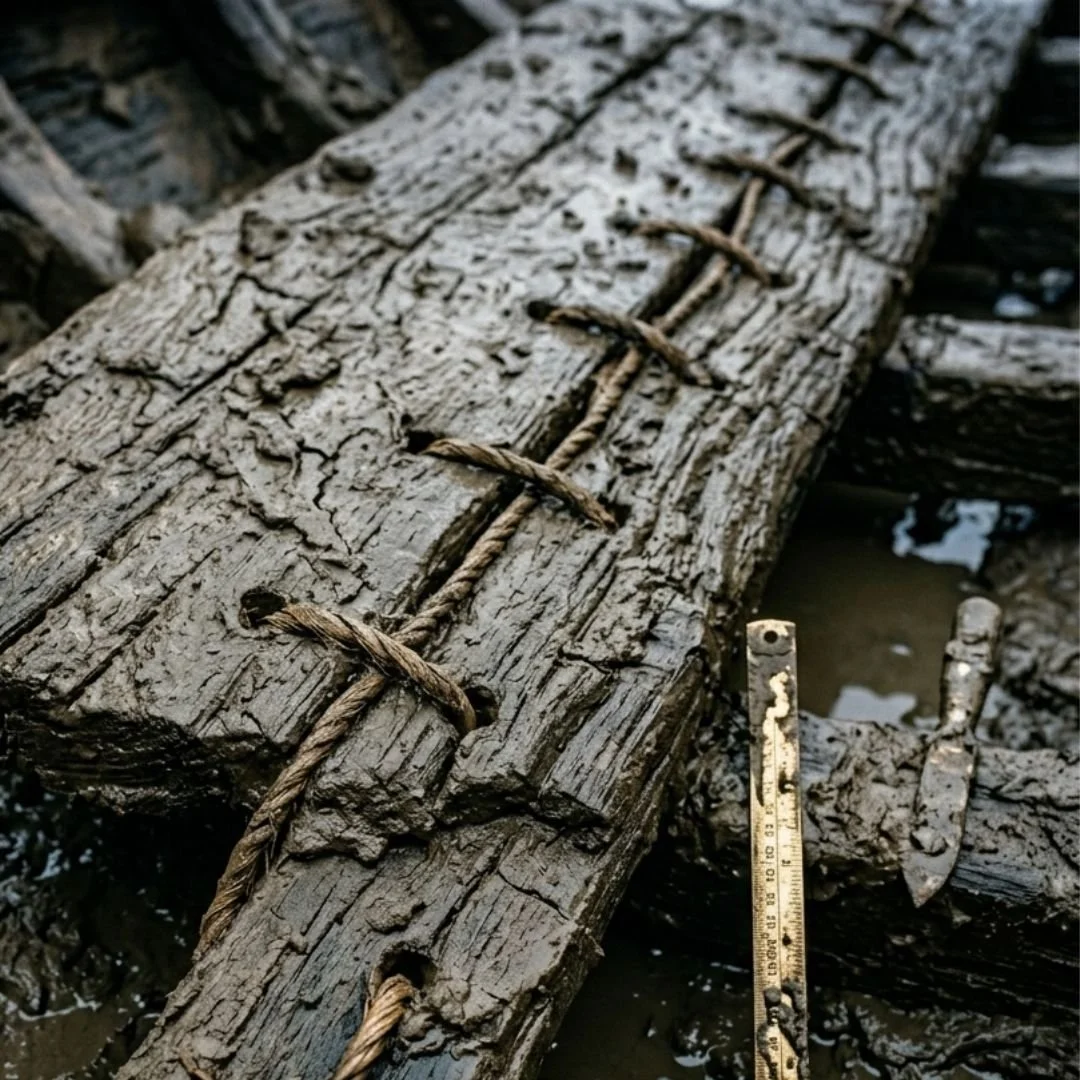
Faced with these constraints, archaeologists made the difficult decision to cut the prehistoric vessel into reusable sections to lift it safely from the mud.
Despite the immense pressure, the team successfully recovered roughly two-thirds of the original craft.
The remaining bow section lay buried beneath a block of modern buildings and had to be left in place, where it remains safely sealed in waterlogged soil today.
Following its retrieval, the recovered hull underwent a painstaking, decade long conservation process to replace the water trapped within the wood fibres with polyethylene glycol, a stabilising wax that prevents the ancient timber from collapsing.
The immaculate condition of the original timbers has also given rise to a fascinating theory regarding the vessel’s final days.
Archaeologists noted that the boat did not sink in a sudden, catastrophic storm; instead, it appears to have been deliberately laid to rest in a quiet, offshoot channel of the River Dour.
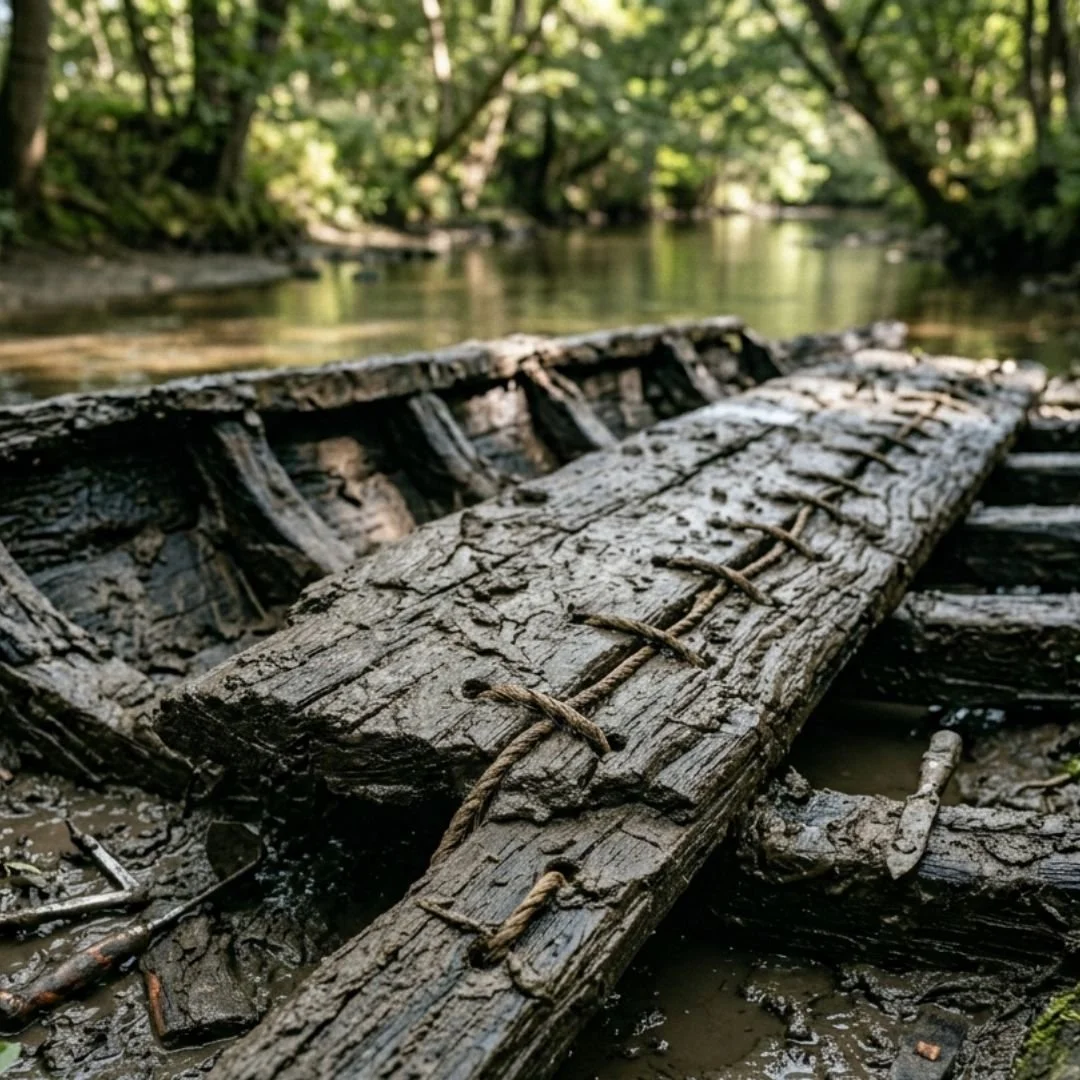
Crucially, evidence suggests that its vital yew stitches were intentionally cut, effectively decommissioning the vessel.
This calculated act implies that the boat’s retirement may have been a ritualistic or communal event, marking the honourable end of a long, faithful service before the river’s oxygen-free silt completely sealed it away from the destructive forces of time.
Today, the preserved segments of the vessel are beautifully reassembled and displayed inside a dedicated gallery at the Dover Museum, where visitors can stand just inches away from the oldest known seagoing vessel in northern Europe.
If you enjoyed this blog post, please follow Exploring GB on Facebook for more!