Roman ‘Man Traps’ at Rough Castle Fort
Dating back nearly 1,900 years, the exceptionally well-preserved lilia (lilies) at Rough Castle Fort on Scotland's Antonine Wall were formidable Roman man-traps.
The northernmost frontier of the Roman Empire, stretching across the narrow waist of Scotland between the Firth of Forth and the Firth of Clyde, holds some of the most remarkable military engineering feats of antiquity.
Often overshadowed by its southern stone counterpart, Hadrian's Wall, the Antonine Wall was constructed primarily of turf, timber and earthwork defences around 142 CE during the reign of Emperor Antoninus Pius.
While much of the wall has eroded into subtle undulations in the landscape, Rough Castle Roman Fort stands out as the best-preserved fortification along the entire line.
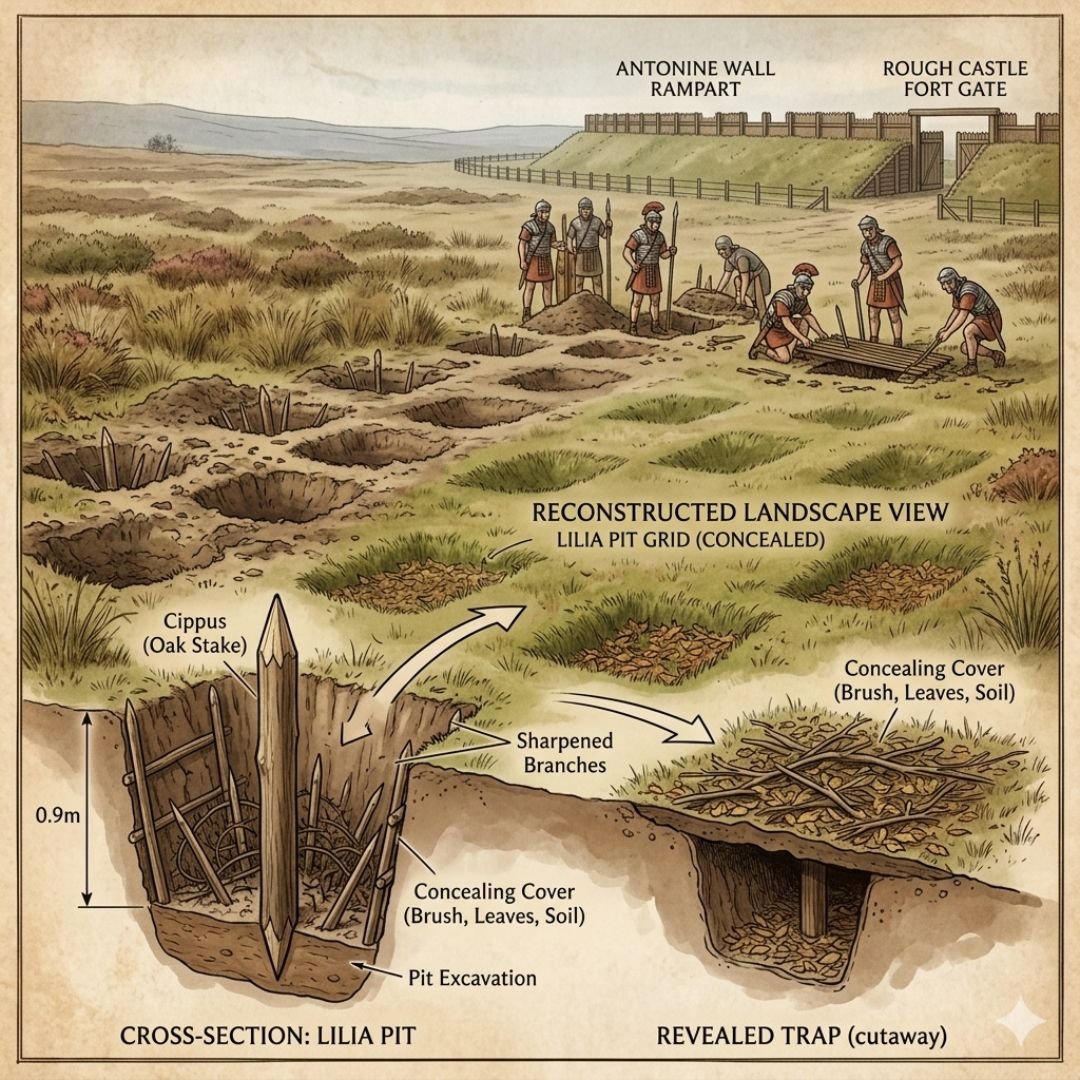
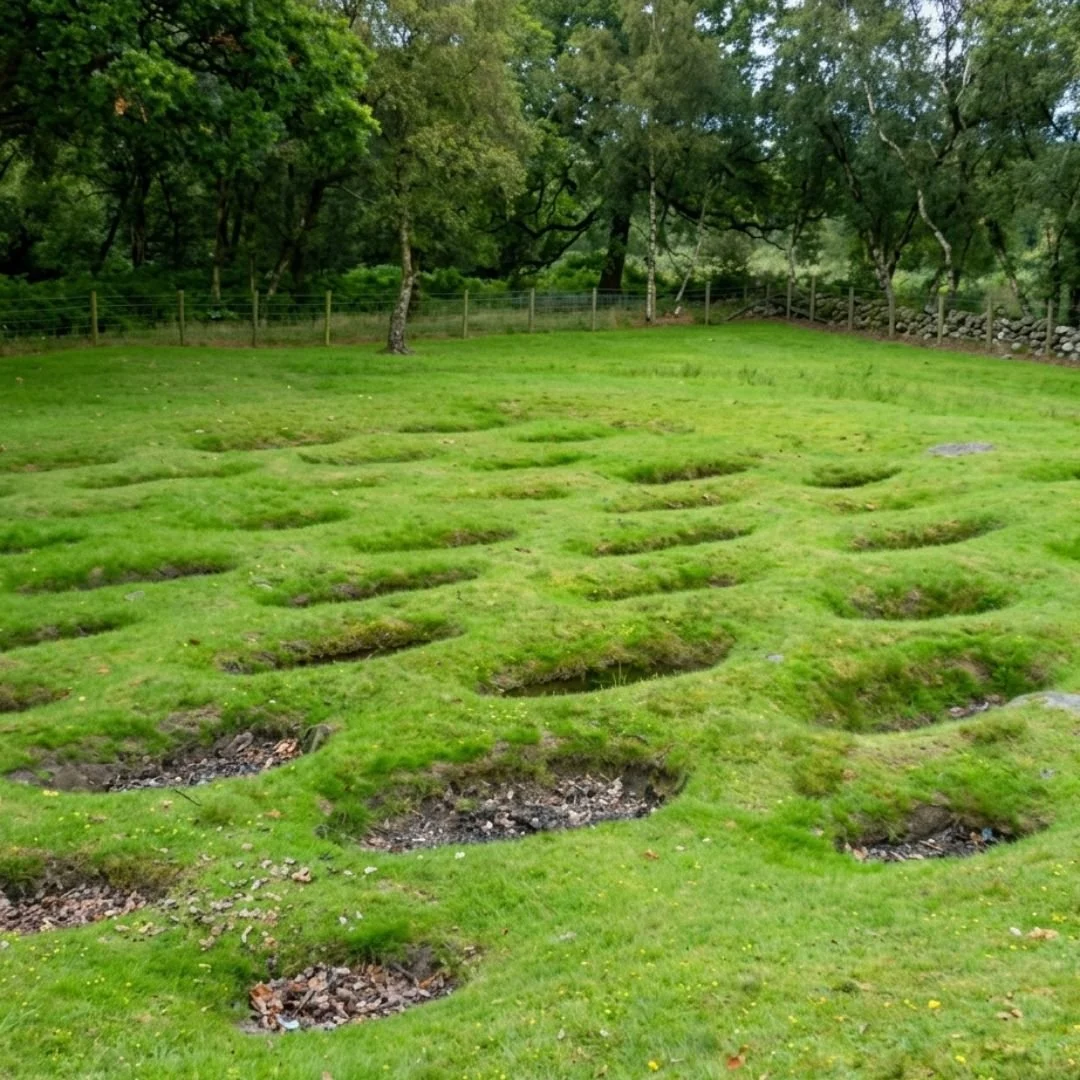
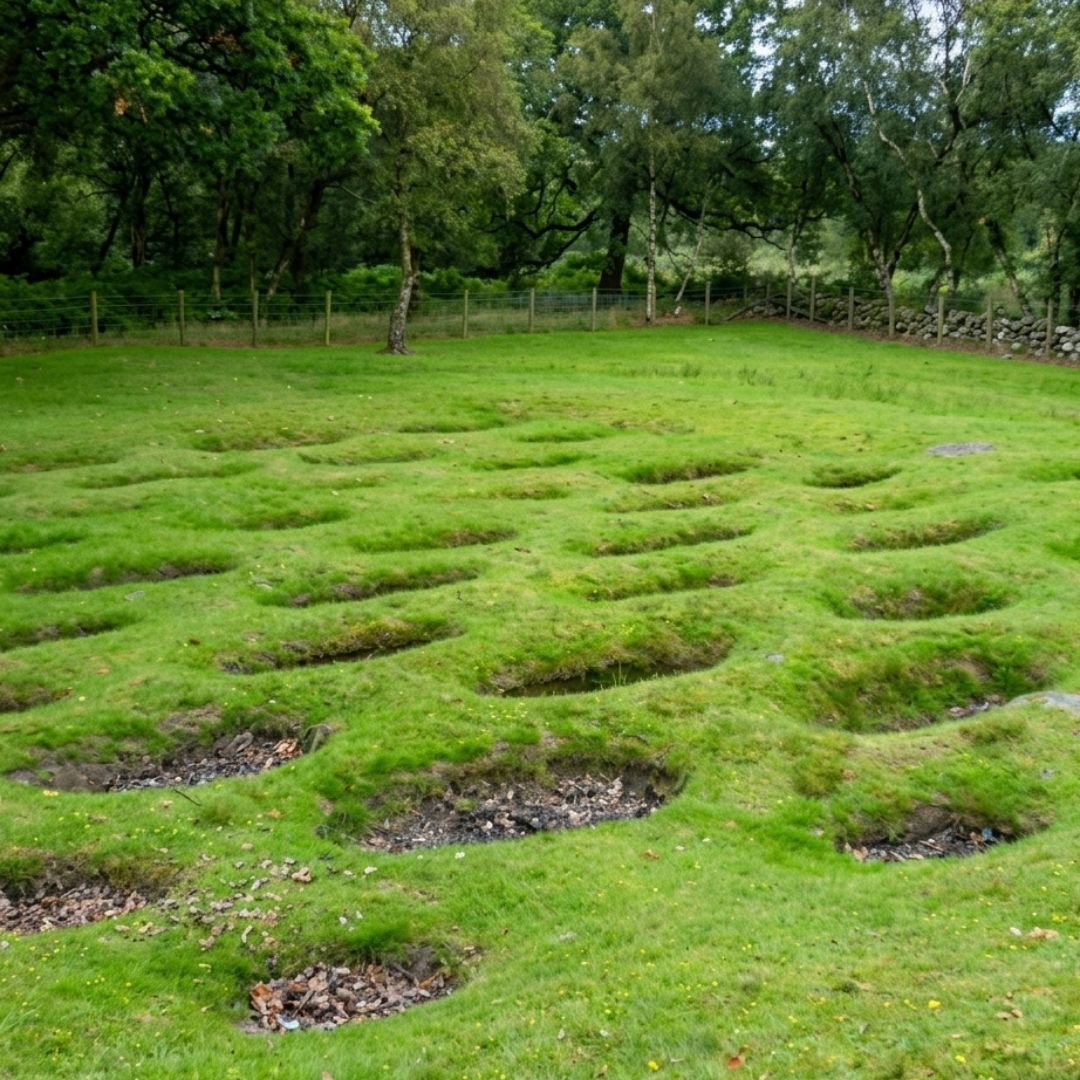
It is here, just beyond the massive defensive ditch of the fort, that archaeologists identified a rare, terrifying feature of Roman military tactic: a defensive grid of trap pits known as ‘lilia.’
The term lilia, meaning lilies, was a piece of darkly ironic military slang coined by the Roman legionaries.
The name derives from the visual appearance of the traps when fully constructed.
To create a lilia field, soldiers excavated a series of deep, cone-shaped or v-shaped pits arranged in a tightly packed, staggered quincunx pattern, resembling the spots on a pair of dice.
Inside each pit, a stout wooden stake was driven firmly into the centre of the earth.
The tip of the stake was whittled to a lethal point and hardened in a campfire.
The Romans then filled the bottom of the pit with loose soil to hold the stake upright, leaving the sharpened tip exposed but hidden just below the rim.
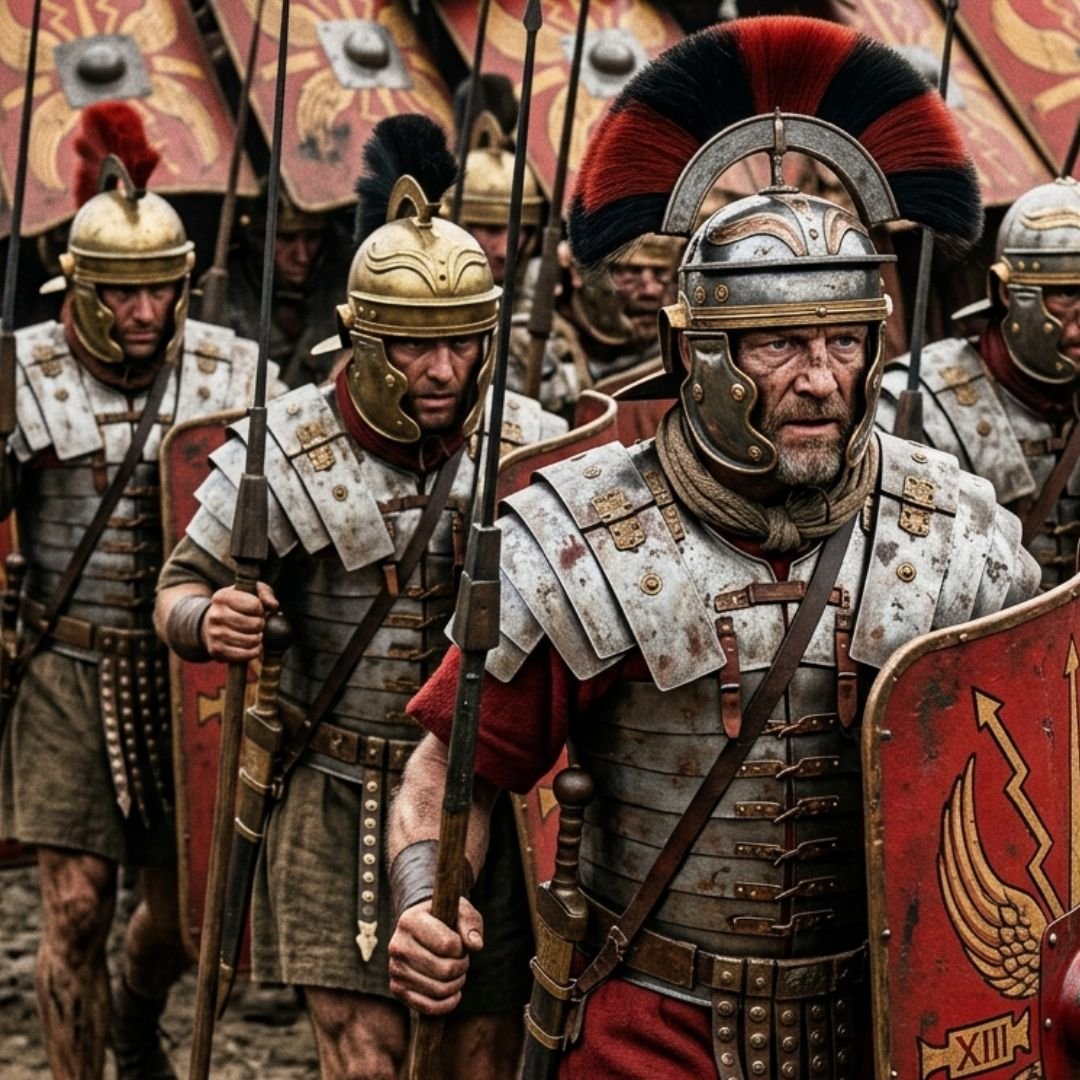
The entire grid was subsequently camouflaged with brushwood, leaves, or loose vegetation to disguise the danger from approaching enemies.
From a distance, the disguised depressions looked deceptively benign, but to an advancing warrior stepping onto the field, they resembled the delicate, cup-like petals of a lily blooming across the landscape.
This brutal defensive strategy was not unique to Scotland, though Rough Castle provides one of the few places in the world where its physical imprint remains clearly visible on the surface.
The master of Roman military engineering, Julius Caesar, famously chronicled the use of lilia during the Siege of Alesia in 52 BCE.
Facing an overwhelming relief army of Gauls, Caesar ordered his men to construct a massive double ring of fortifications that included trenches, palisades, and rows of hidden obstacles.
In his commentaries, Caesar detailed how these v-shaped pits acted as an early form of a minefield, breaking the momentum of charging infantry and impaling cavalry horses before they could ever reach the main ramparts.
Nearly two centuries later, the legions stationed at the edge of the Scottish Highlands resurrected this exact manual to fortify Rough Castle against the local Caledonian tribes.
At Rough Castle, the positioning of the lilia reveals a sophisticated understanding of spatial psychology and choke-point warfare.
The fort itself was heavily fortified with multiple deep ditches protecting its turf ramparts, but the northern front faced a unique vulnerability where a natural causeway or approach route narrowed toward the fort.
To exploit this terrain, the Roman engineers dug ten parallel rows of lilia pits directly north of the main ditch, explicitly targeting the path an attacking force would be forced to take.
Because the Antonine Wall was built from turf rather than stone, it lacked the absolute vertical security of Hadrian's Wall, making rapid-response perimeter defences essential.
The lilia field did not just serve to injure attackers; its primary tactical purpose was disruption.
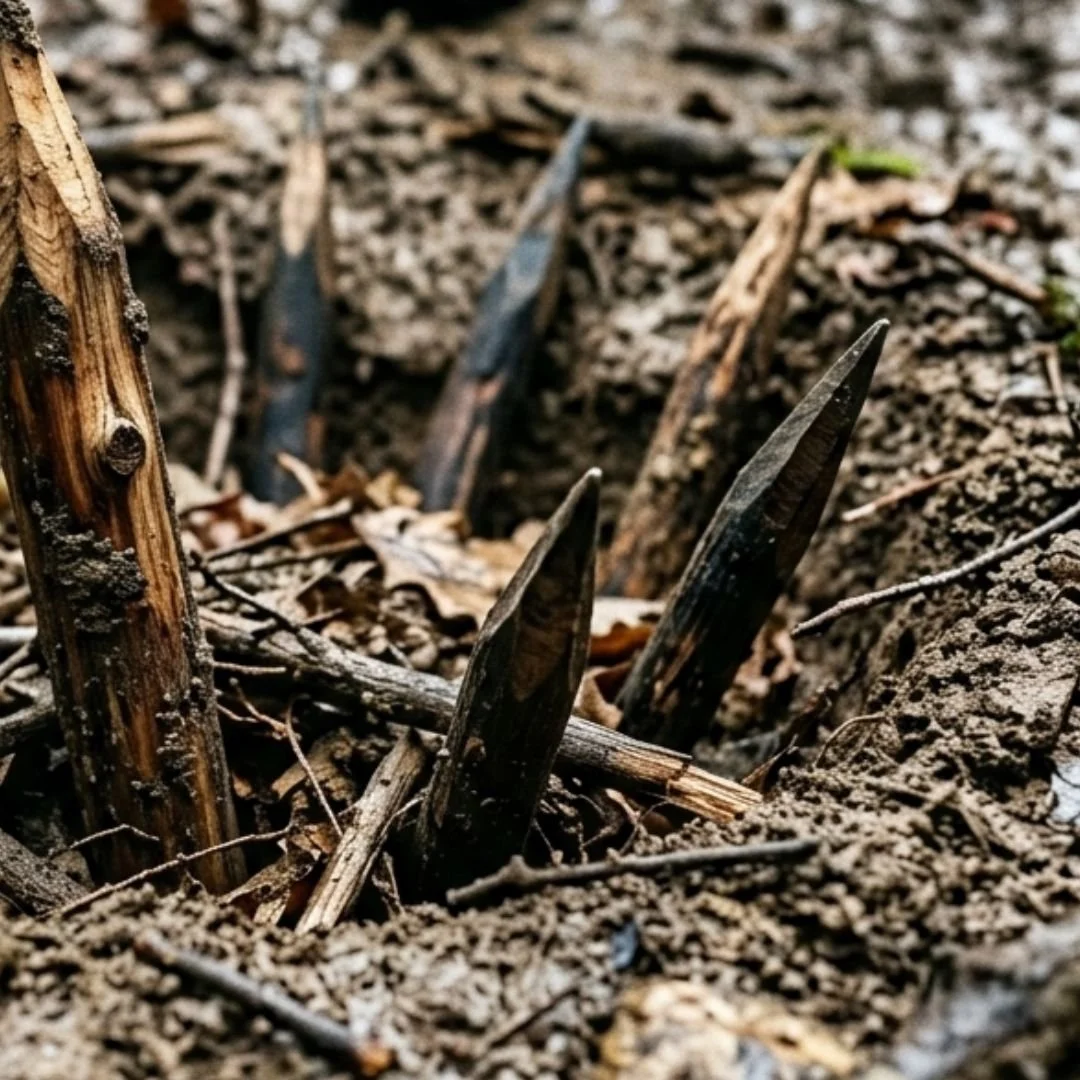
A charging army, encountering a hidden field of ankle-shattering stakes, would immediately lose its formation, speed, and cohesion.
As soldiers tripped, fell, and screamed in the pits, the entire advance would grind to a halt, turning the bottlenecked warriors into sitting targets for Roman archers and artillerymen firing from the fort towers above.
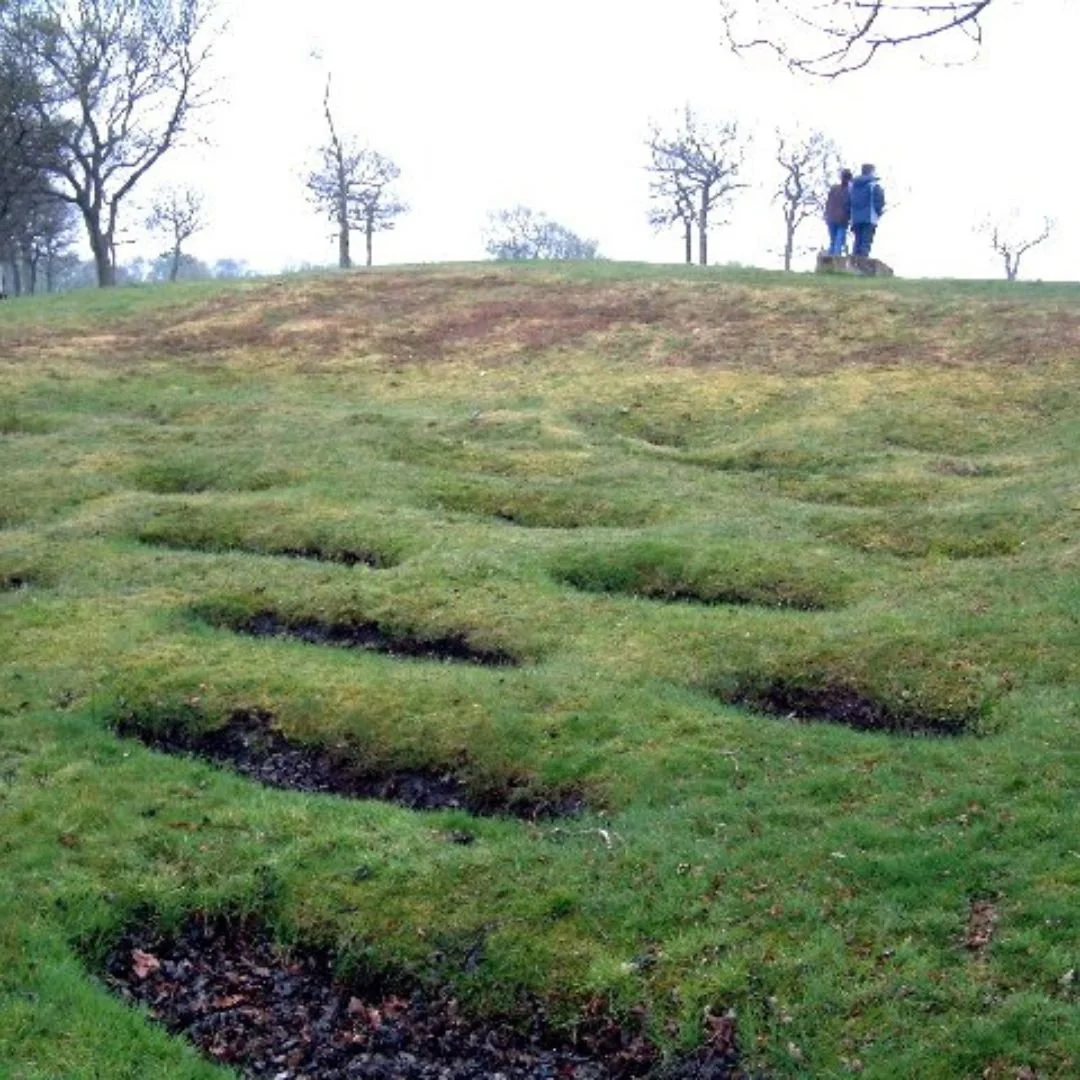
Do they look the same today as they did nearly 2,000 years ago? Yes and no.
The layout and shape of this ancient defence system are remarkably unchanged, but their appearance is entirely different.
Back in AD 142, this was a stark, muddy, and terrifying military installation.
Today, nature has beautifully reclaimed the violence of the frontier: the sharp stakes are long gone, and the deadly honeycomb grid is now a peaceful, undulating blanket of soft green grass that occasionally collects rainwater.
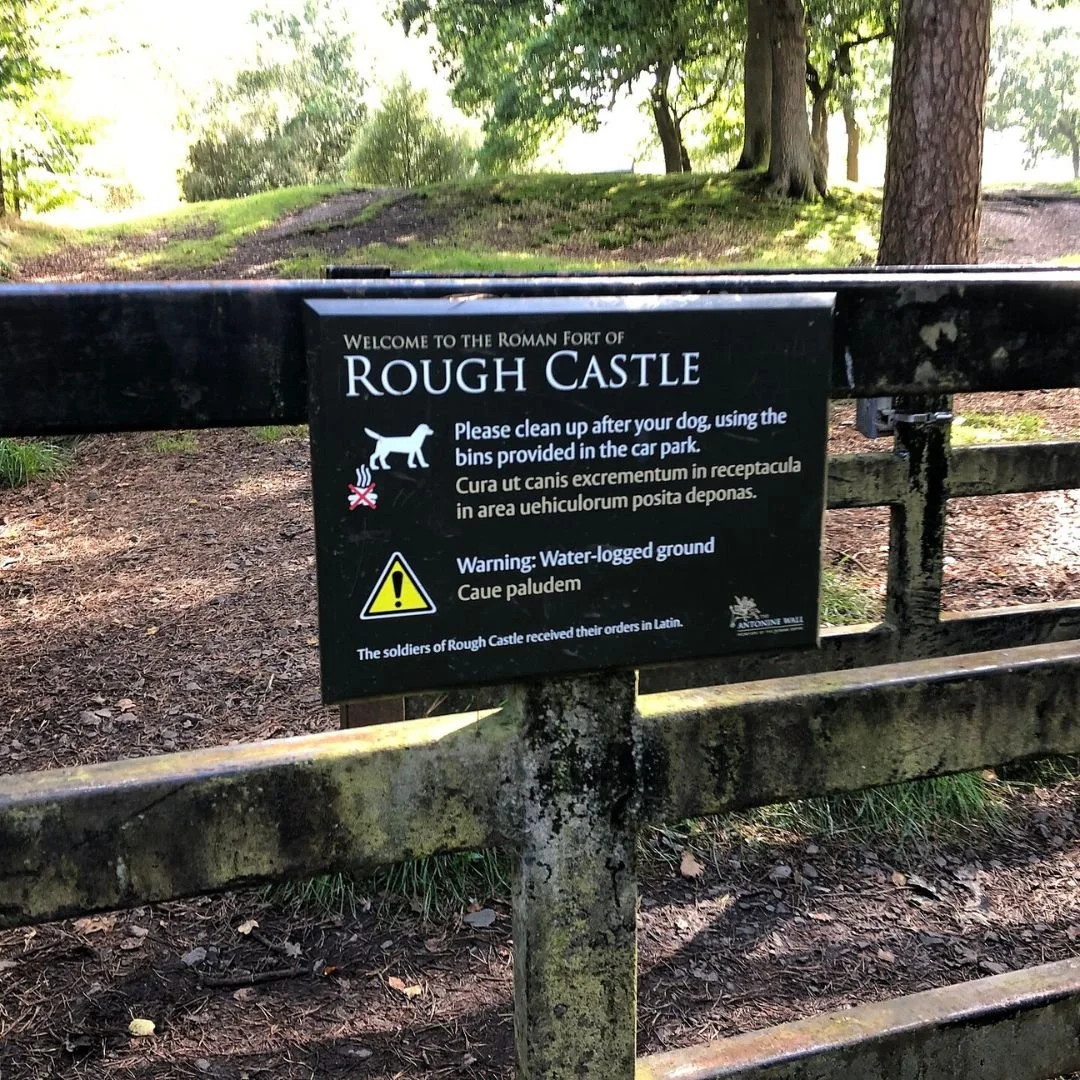
It’s an incredible, eerie feeling to stand exactly where Roman soldiers stood, looking at a defensive line that still retains its distinct, calculated shape after millennia of Scottish weather.
If you enjoyed this blog post, please follow us on Facebook for more!
Thank you for visiting Exploring GB.