Archaeologists Unearth One of Britain’s Oldest Churches
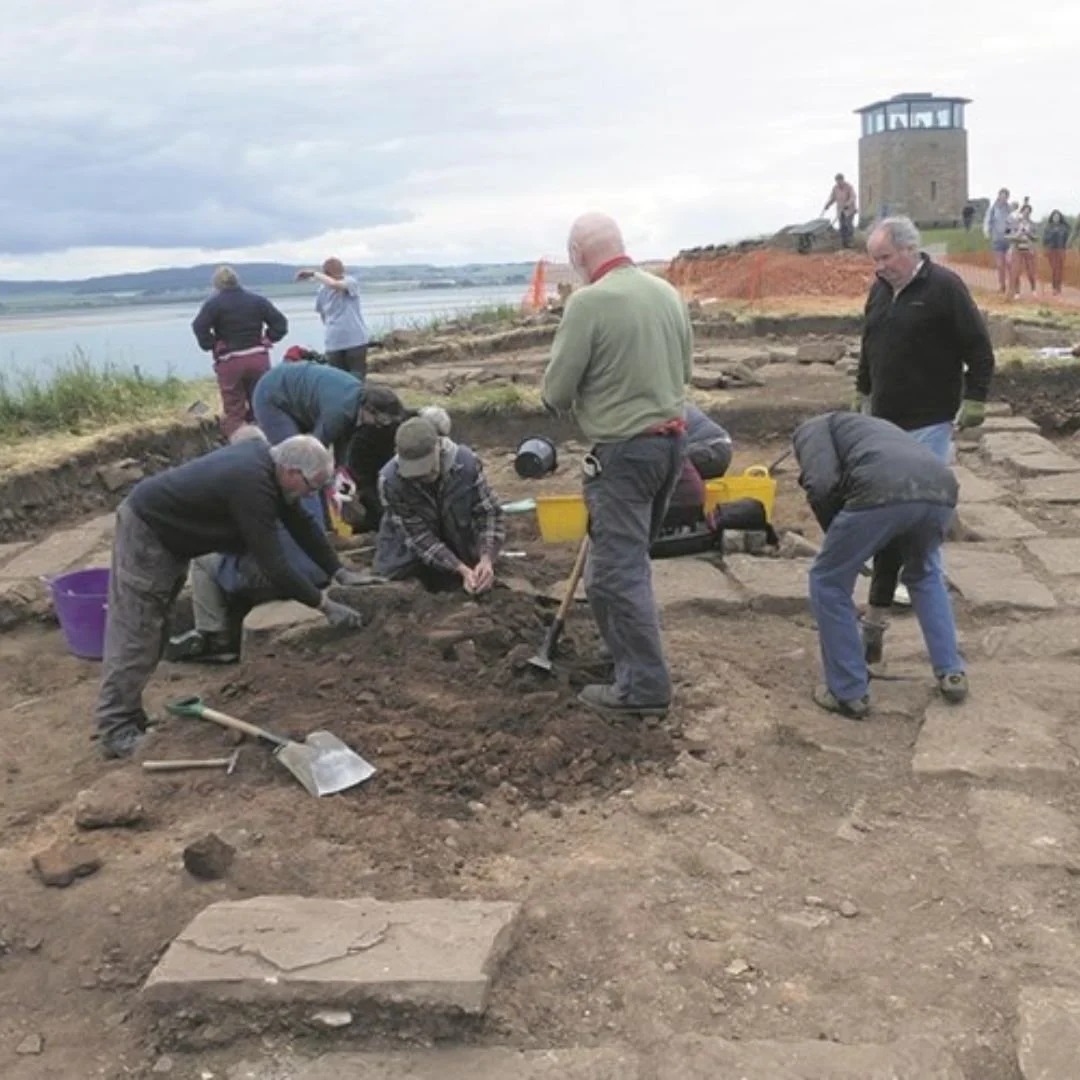
On Holy Island, just off the coast of Northumberland, archaeologists uncovered the 7th century stone foundations of a large church.
Northumberland County Council
Experts believe this discovery marks the original site established by St. Aidan in 635 AD, which would make it one of the oldest known churches in Britain.
The remote, windswept tidal island of Lindisfarne, has long been revered as the cradle of Christianity in northeastern England.
For centuries, the physical reality of its earliest golden age remained largely shrouded in myth and hidden deep beneath later medieval construction.
Northumberland County Council
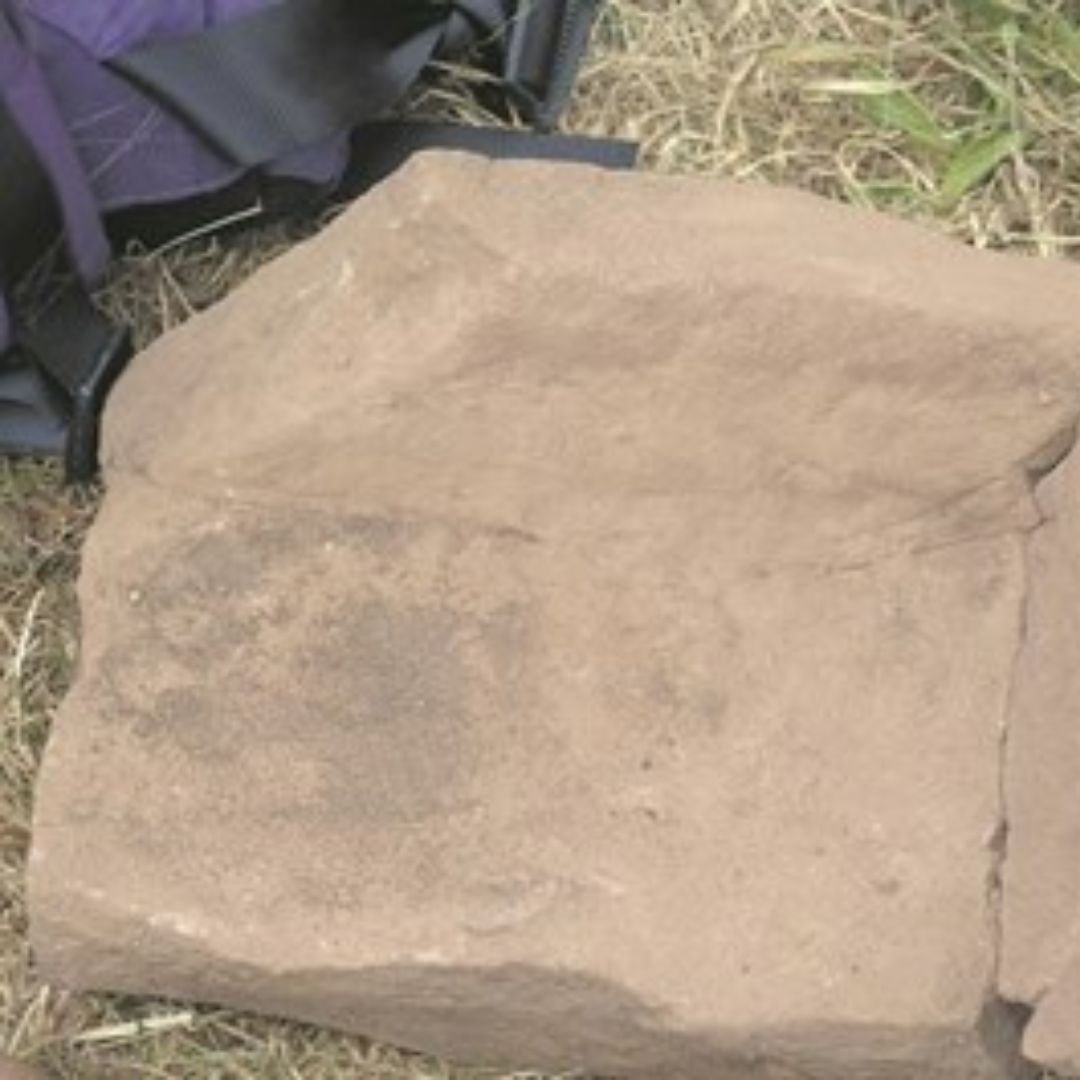
However, a stunning archaeological discovery on a high, rocky ridge overlooking the North Sea has changed our understanding of the island's early medieval layout, revealing what is believed to be one of the oldest stone churches in Britain.
Working under the auspices of the Peregrini Lindisfarne Landscape Partnership, a dedicated team of archaeologists uncovered the substantial stone foundations of a substantial 7th century church.
The structural remains were discovered on a prominent landform known as the Heugh, a dramatic cliffside location that Anglo-Saxons fittingly referred to as "The Precipice."
Building a church just a few metres from a sheer drop off was a challenging engineering feat, but it carried immense political and spiritual symbolism.
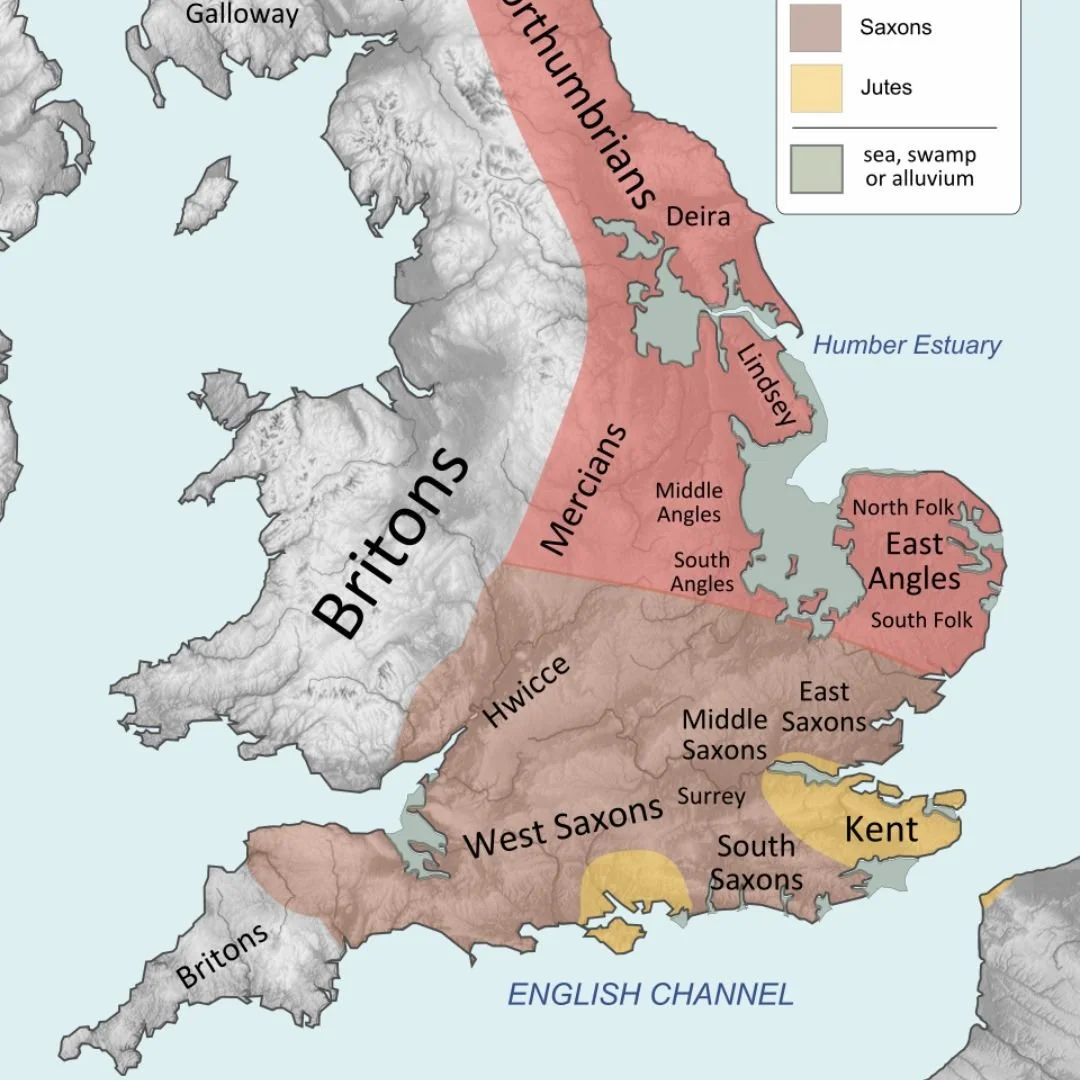
Sitting proudly on the exposed ridge, the building stood in direct line of sight with Bamburgh Castle, located just four miles across the water, which was the royal seat of King Oswald of Northumbria.
This visual link is crucial to identifying the church's historical context.
King Oswald was the powerful 7th century Christian monarch who first invited Irish monks from the monastery of Iona to evangelise his pagan kingdom.
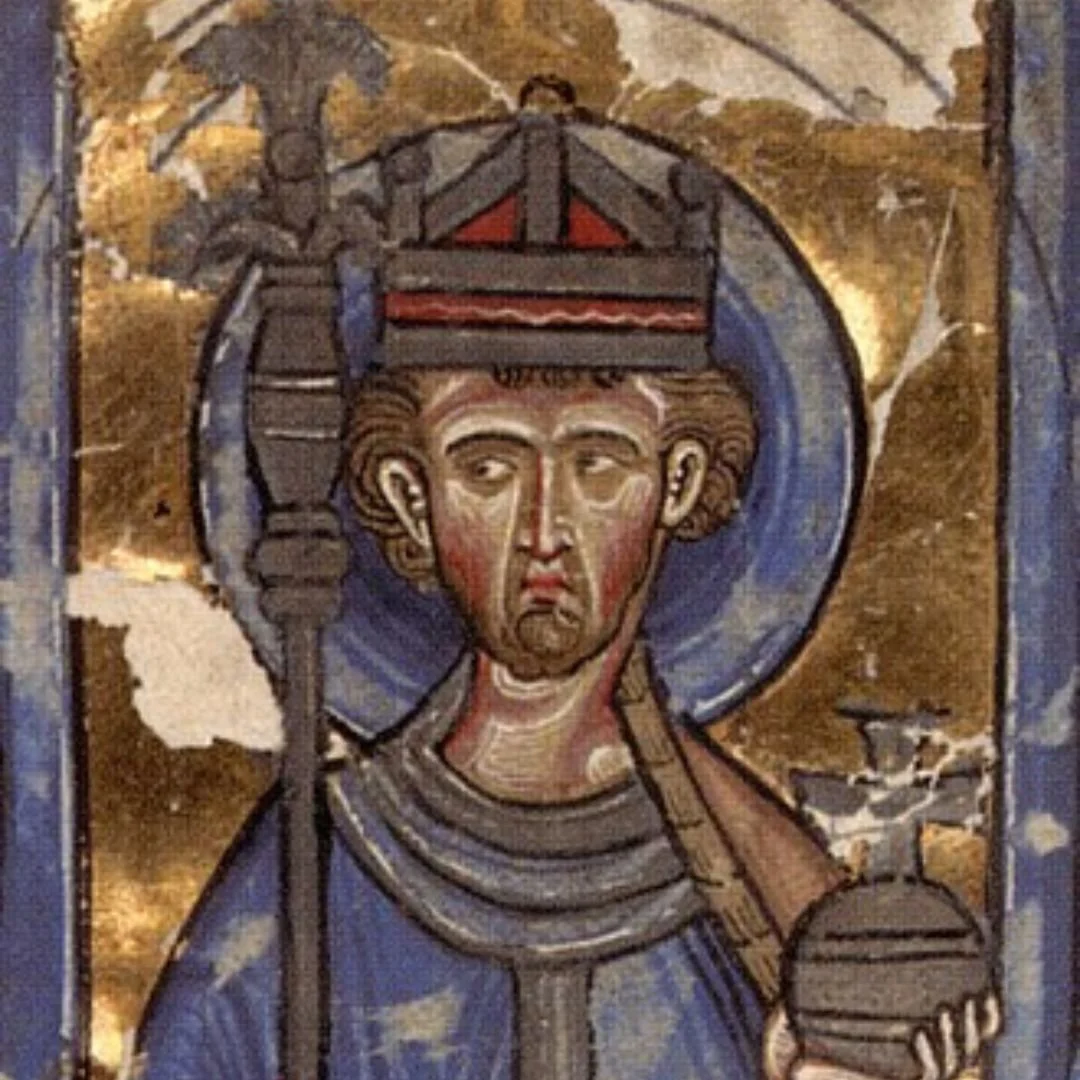
In response to this royal invitation, St. Aidan arrived on Lindisfarne in 635 AD and established his monastic community.
Historical texts from the Venerable Bede note that Aidan originally built a simple timber church on the island.
Because early wood structures were deeply revered, later generations often built stone shrines or chapels directly over or around them to protect the sacred sites from elements and invaders.
Experts believe these newly discovered stone foundations mark the exact site founded by St. Aidan, serving as a permanent stone monument to the pioneer saint's original 635 AD timber church.
The physical attributes of the ruins strongly support a late 7th century origin.
Measuring roughly 16 metres long and seven metres wide, the church features a distinct nave and an eastern chancel configuration.
The masonry style is primitive, exhibiting a ‘pre-architectural’ quality where the massive sandstone blocks appear to have been worked by craftsmen who were far more accustomed to building with timber than with stone.
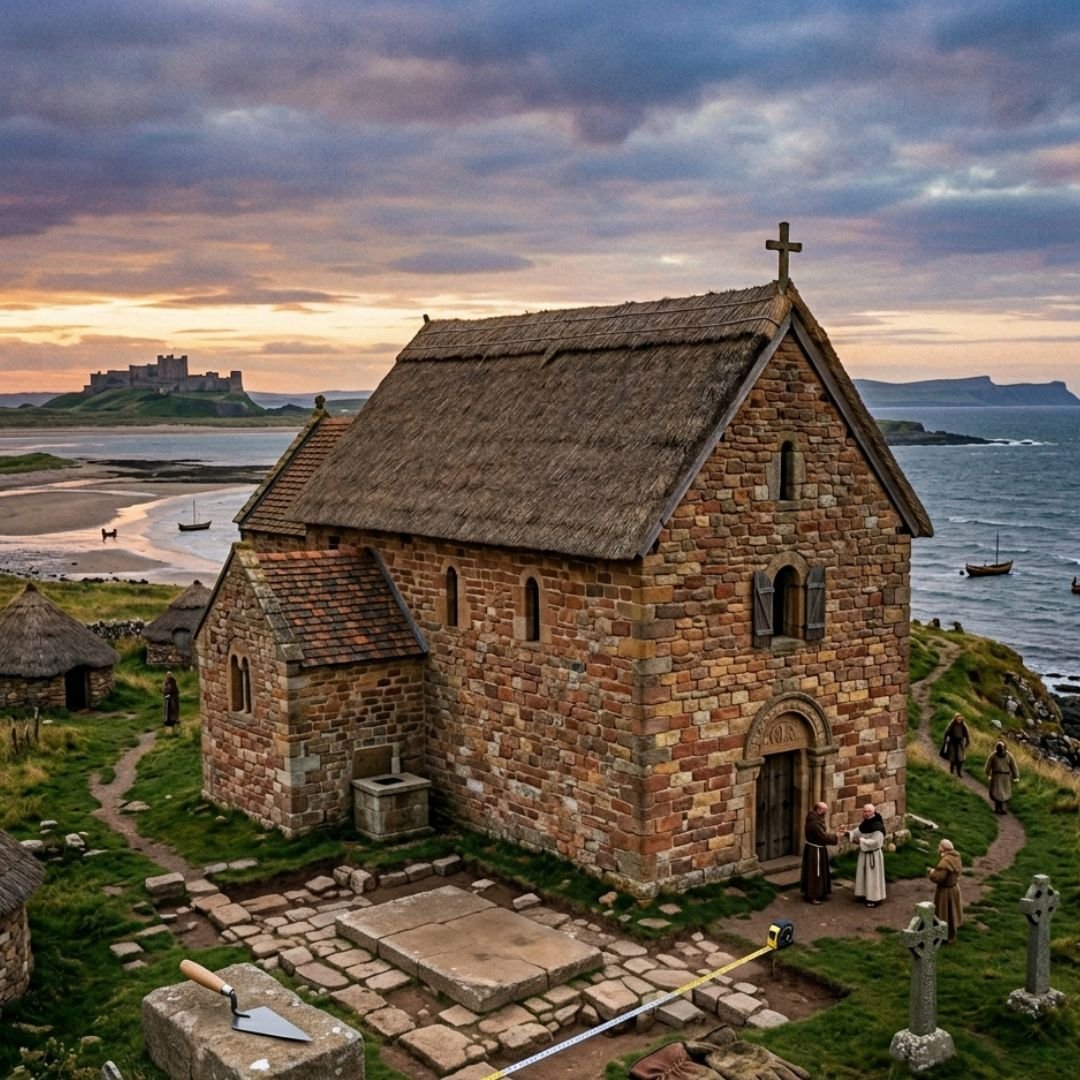
How it might have looked
At the extreme eastern end, archaeologists discovered a stone structure that appears to be the base of the original altar.
Finding an altar pushed directly against the eastern wall is a powerful chronological indicator, as church layout traditions shifted later in the 7th century to position altars several meters further west.
Furthermore, the building was constructed from bright white sandstone.
Located high on the dark volcanic rock of the Heugh, the church would have caught the sun and gleamed brightly across the water, acting as a literal beacon of the Christian faith to the royal palace at Bamburgh.
Just 50 metres away from the church site, the excavation revealed another massive stone platform measuring eight metres square with walls over two metres thick.
Archaeologists have identified this as the foundation of an ancient watchtower and signalling outpost.
This tower would have been high enough to send and receive beacon signals from the monks living on the Farne Islands, seven miles out to sea.
Historical accounts note that a tower on this very ridge was used to signal the main monastery when Lindisfarne’s beloved St. Cuthbert died on the Farne Islands in 687 AD.
Prior to this discovery, academics believed that the original Anglo-Saxon complex was completely buried beneath the existing 12th century Lindisfarne Priory and the neighbouring St. Mary’s Parish Church.
The revelation of an entirely separate, scattered configuration of chapels and towers on the Heugh suggests that Lindisfarne was originally organised much like Iona, favouring a dispersed network of smaller chapels rather than a single, centralised monastic building.
By pulling back the turf on the Heugh, archaeologists have finally provided a physical connection to the era of St. Aidan and St. Cuthbert, anchoring the spiritual legends of Holy Island into the solid white stone of the Northumbrian coast.
If you enjoyed this article, please follow Exploring GB on Facebook for more!
Thank you for visiting Exploring GB, we hope to see you next time!