Burgh Island Sea Tractor
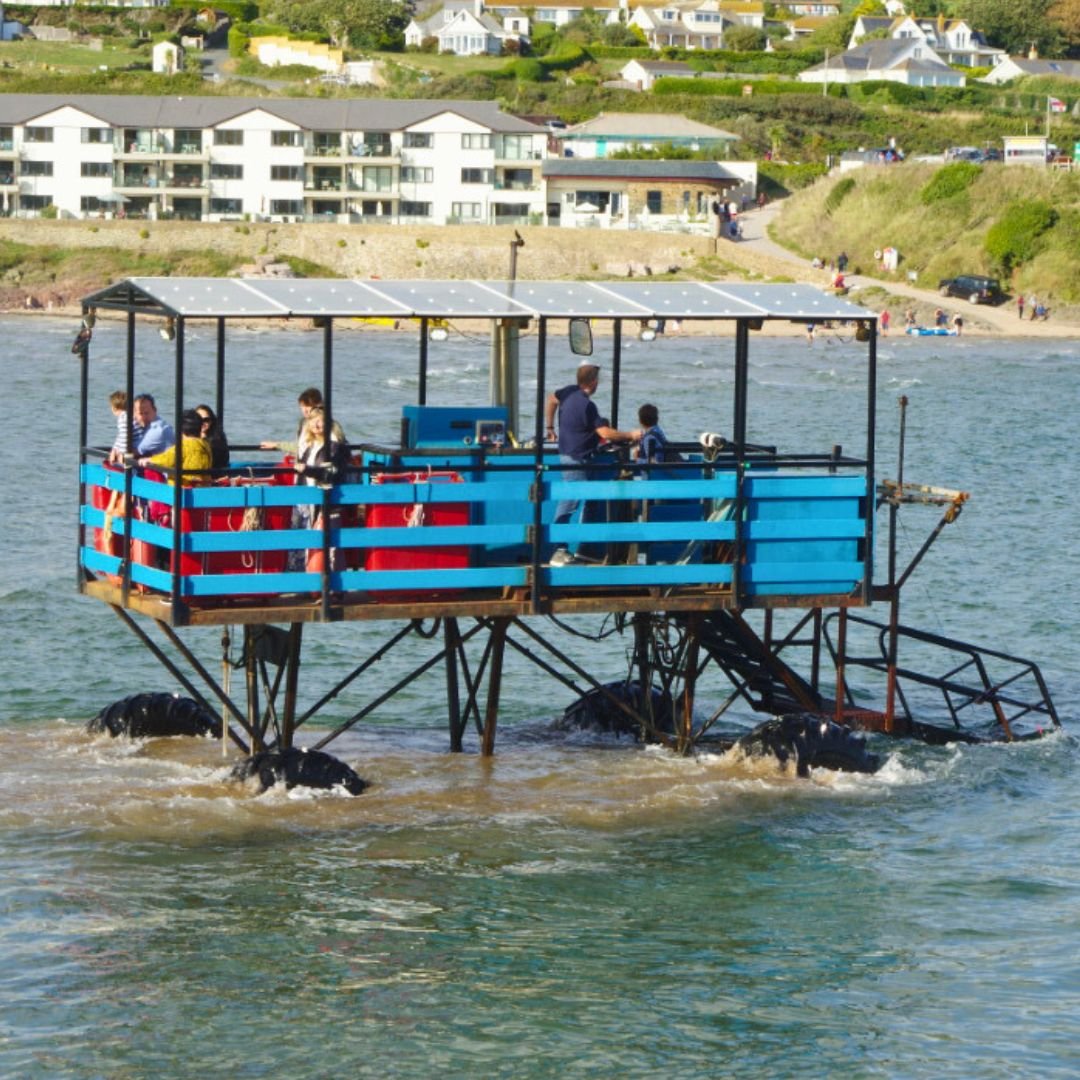
The Burgh Island Sea Tractor, affectionately known as Trundle, is a third generation hydraulic Sea Tractor that has been a fixture of Burgh Island since the 1970s.
Burgh Island is a tidal island on the coast of South Devon, near the small seaside village of Bigbury-on-Sea.
Its iconic Sea Tractor, an engineering masterpiece for its time designed in 1969, transported guests from the mainland to Burgh Island Hotel.
It's famously the only one of its kind in the world, specifically engineered for this tidal crossing.
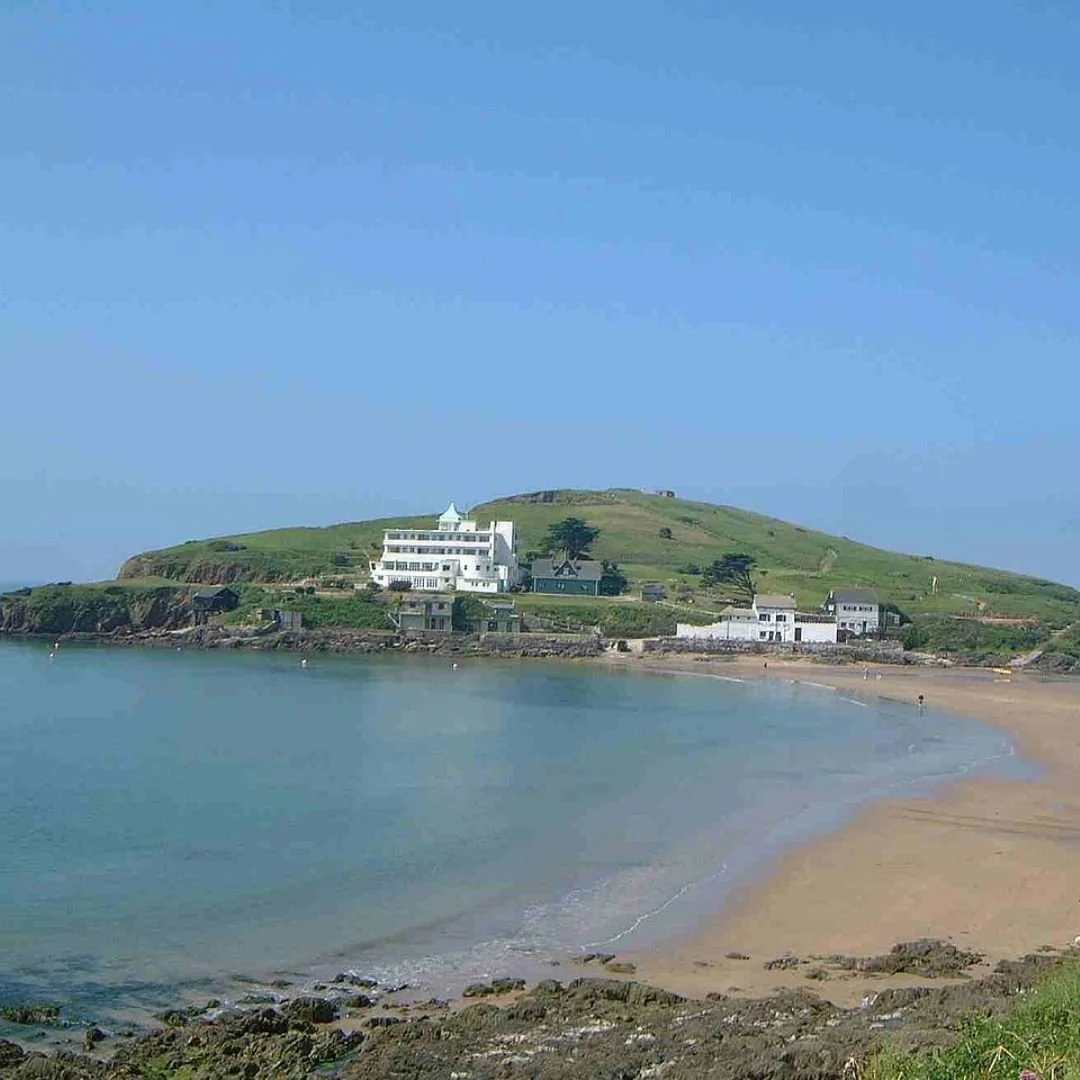
There are several buildings on the island, the largest being the Art Deco Burgh Island Hotel. The other buildings are three private houses, and a pub, the Pilchard Inn, which dates to the 14th century.
The island is strongly associated with writer Agatha Christie, who often visited and used the island and its hotel as a setting and inspiration for two famous novels.
These novels are ‘And Then There Were None’ (1939) and ‘Evil Under the Sun’ (1941).
A beach house was built for Agatha Christie as a writer's retreat and still exists on the island today.
The famous Sea Tractor
Originally designed as a pioneering way to travel between the island and the shore, Trundle has become an iconic symbol of Burgh Island and a beloved sight along the coast.
She is relied upon almost daily to navigate the waves when the tide is in, transporting guests to their magical stay on the island.
The Sea Tractor was originally designed in 1969 by Robert Jackson CBE, a pioneer of the nuclear power station program in the 1950s.

This remarkable vehicle is the only of its kind anywhere in the world.
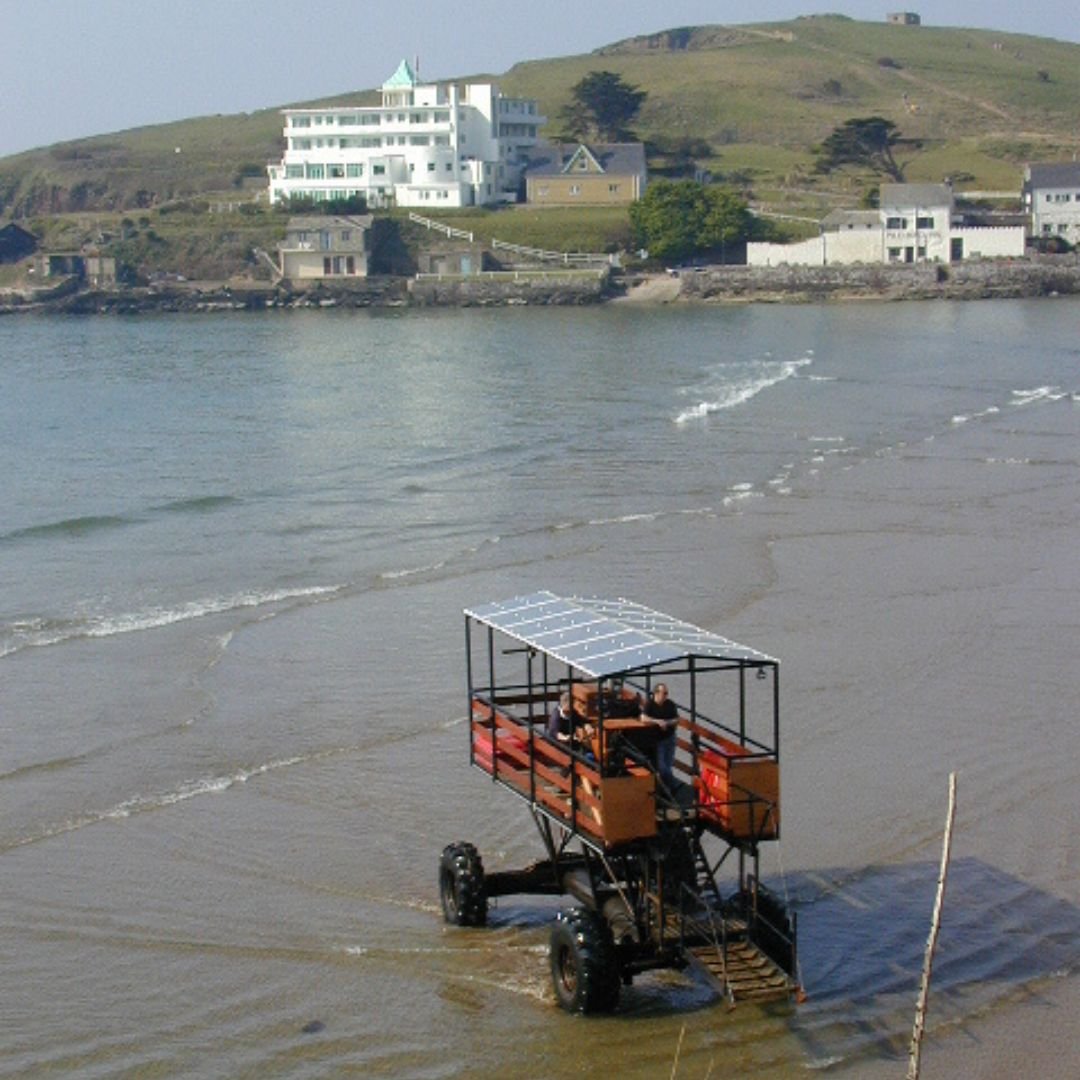
The tractor's most defining feature is its high-up passenger cab mounted on a chassis with tall wheels.
This design allows it to drive directly on the submerged sandy bottom of the causeway at high tide, while the passengers remain safe and dry several feet above the water line, navigating waves and currents.
Robert Jackson operated it as a hydraulic Sea Tractor. The use of hydraulics allows for the necessary power to propel the vehicle through the water and sand, ensuring reliable operation despite the harsh, corrosive saltwater environment.
It cost £9,000 to build. Rather interestingly, in exchange for his work, Jackson was paid with a case of champagne.
Given that Jackson was a highly accomplished engineer (a pioneer of the UK's nuclear power program), the design work for the Sea Tractor was likely not his primary source of income.

It is highly probable that he undertook the project as a personal favour, a challenging passion project, or a friendly commission for the island's owner at the time.
The case of champagne would have been a generous thank you or a complimentary gesture rather than a professional design fee.
Although built in the late 60s, Trundle has recently been renovated to a pristine condition and is celebrated as the best way to arrive at the Burgh Island Hotel.
When the tide is out or the waves are too unpredictable, the sea tractor remains within the confines of Burgh Island, and cars are dispatched to the shore to pick up hotel guests.
The cost to ride the Sea Tractor for members of the public (non-hotel guests) is typically £2.00 each way per person.
If you’re interesting in visiting, the hotel offers a wide range of activities, dining options, and events throughout the year, such as ballroom dances, artist retreats, and murder mystery evenings.
The Burgh Island Hotel has hosted famous guests like Agatha Christie, Winston Churchill, and The Beatles.
The hotel features 25 beautifully designed rooms and suites, each uniquely decorated and named after its most distinguished guests.
From the most luxurious suite to the charming Beach House named in honour of Agatha Christie, every stay at Burgh Island is a memorable experience.
Someone who recently stayed at the hotel said: “From seeing the hotel as you drive towards the island on the mainland through to departing, the whole stay was fantastic. could not fault the ambience, the service or the restaurant.
”Take a walk around the island-it's wonderful.”

If you enjoyed this blog post, please follow Exploring GB on Facebook for daily travel content and inspiration.
Don’t forget to check out our latest blog post below!
Thank you for visiting Exploring GB.